


For two years, we have lived through the opening stages of an attempt to turn our country into an oligarchic white Christian nationalist ethnostate. The midterms were a crucial test: would voters consent to this fascist project? Millions of Americans understood the assignment and answered with a resounding “no.”
And yet, too much of the post-election coverage has collapsed this historic victory over fascism into an overly simplistic story about prices. “Affordability” wasn’t the single driving cause of the election, but it has certainly driven most of the post-election analysis. Why?
This is the second in a two-part election analysis. In part one, I argued that the midterms represented a decisive repudiation of MAGA that opened the possibility (but not inevitability) of a long-term political realignment. A many-sided revolt gave us a resounding “no.” The question now is whether we can build a lasting majority around a common “yes.”
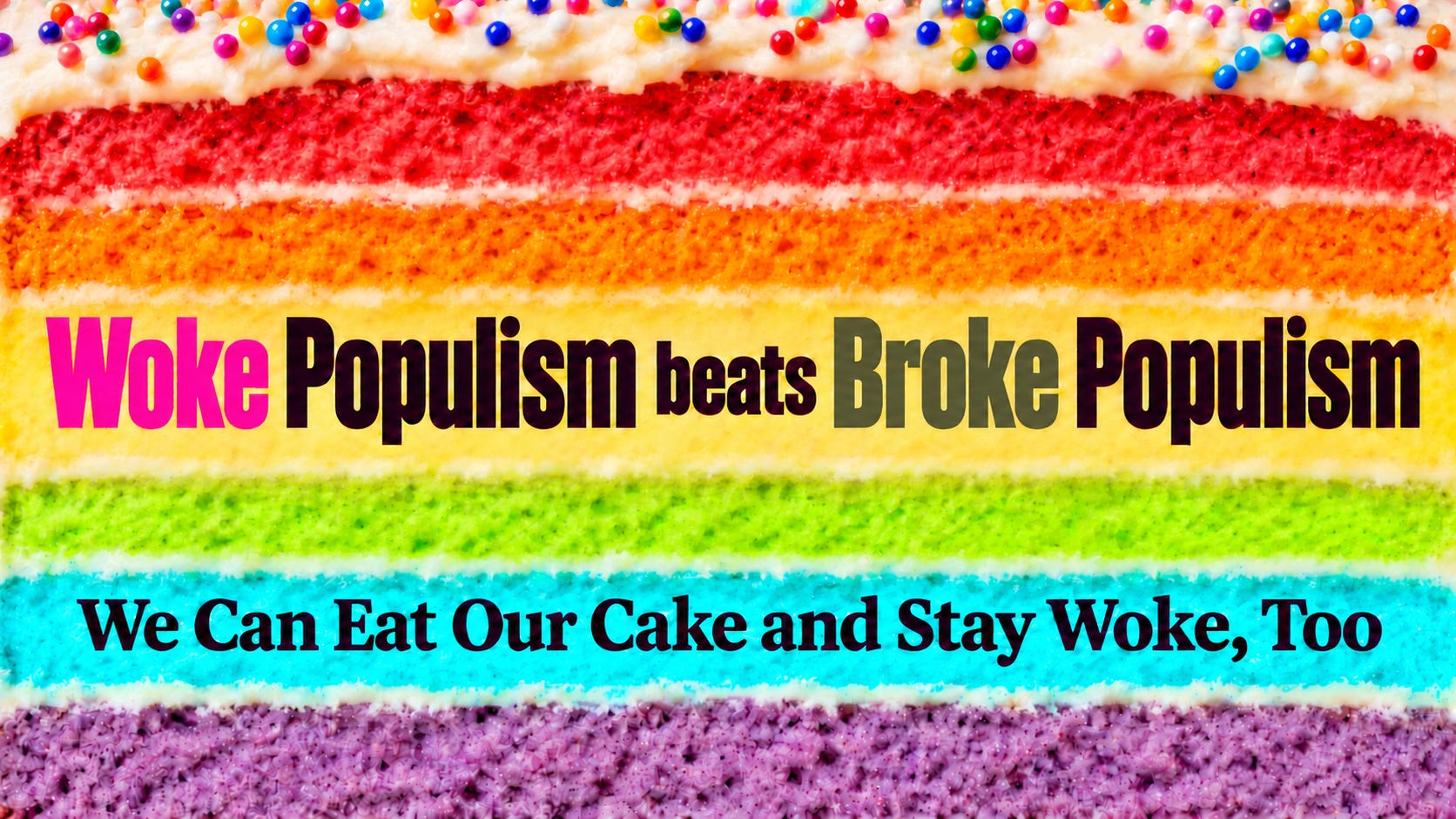
In this part, I explore the forces flattening this election into a story about prices. That framing fuels “broke populism,” an insistence that we must sideline social justice to win on kitchen-table issues. But we don’t have to choose between bread and roses; in fact, we can’t eat our cake unless we stay woke, too. Economic progress cannot survive without social progress ; retreating on one front undermines both. Only “woke” populism—rooted in a rainbow coalition fighting for a Third Reconstruction—can transform our economy, society, and democracy for good.
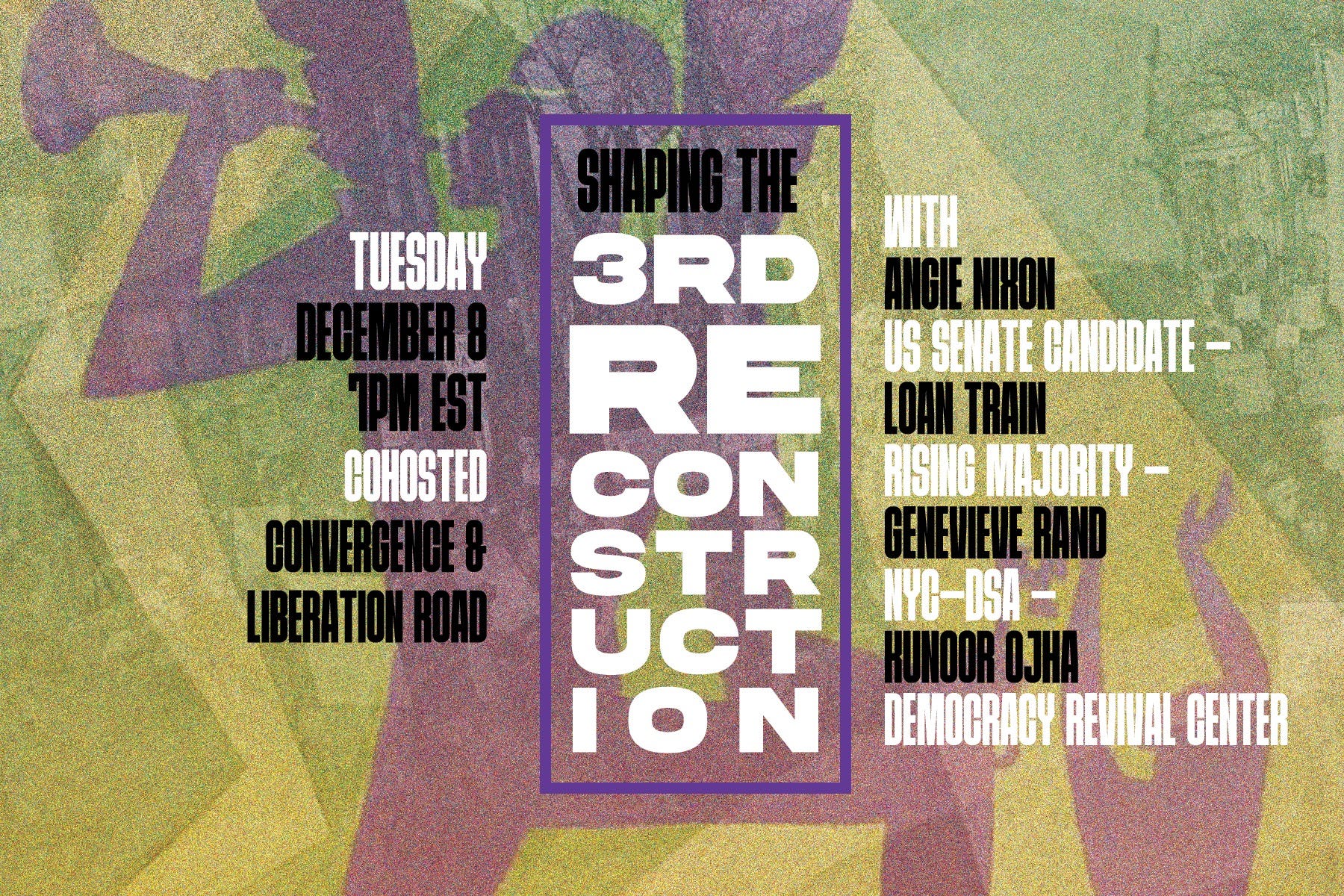
Ready to help win a Third Reconstruction? On Tuesday, December 8 at 7 PM ET, Convergence and Liberation Road are hosting Shaping the Third Reconstruction.
The ‘Pollingism’ Feedback Loop
Just two years ago, many mistook Trump’s narrow win for a durable right-wing realignment of the electorate around a revanchist project of white supremacy, Christian patriarchy, and billionaire tech oligarchy.
Instead, voters turned out in record numbers to reject that fascist agenda. Americans were horrified by ICE’s lawlessness, outraged by racist gerrymanders, disgusted by brazen corruption, alarmed by authoritarianism, furious that Trump had dragged the country into another war, and fed up with rising costs. These and other grievances converged in a many-sided revolt against Trump’s multi-pronged assault on our democracy.
And yet, too much of the post-election coverage has collapsed that anti-fascist victory into a reductive story about the price of gas and goods. “Democrats won on affordability,” says NBC. “The economy propelled Democrats to victory,” claims NPR. According to the Wall Street Journal, “Voters fed up with high prices gave Democrats a landslide.”
Something strange is going on here. Americans voted down The Great Dictator, The Birth of the Nation and The Handmaid’s Tale. So why is the press reviewing The Price Is Right?
One reason is an overreliance on broad extrapolations from reductive polling questions—in other words, lazy use of shitty poll data. This is largely driven by a media environment optimized for quick soundbites and simple headlines. But it also stems from a more constructive impulse: people want an objective, empirical understanding of election dynamics that moves beyond their personal opinions and subjective bias, and turn to polls to give them that.
The problem is that polling questions are an incredibly inadequate proxy for the complex and overlapping motivations that shape how and why people vote. When pundits treat poll numbers as gospel, they mistake flattened models of voter preferences for a much more multifaceted reality. Social theory has a fancy word for this error, reification—treating a construct actively shaped by human choices as if it were an objective external truth. In other words, confusing the map with the territory.
This dynamic quickly becomes a self-fulfilling prophecy. When strategists decide the numbers “prove” voters only care about a handful of issues, campaigns flood the zone with those exact talking points. By the time the next survey rolls around, voters naturally echo those same priorities back; after all, that’s what dominates the airwaves. At that point, campaigns and reporters aren’t listening to the public; they’re just shouting into a canyon and taking notes on the echo. Strategist Anat Shenker-Osorio memorably calls this phenomenon “pollingism.”
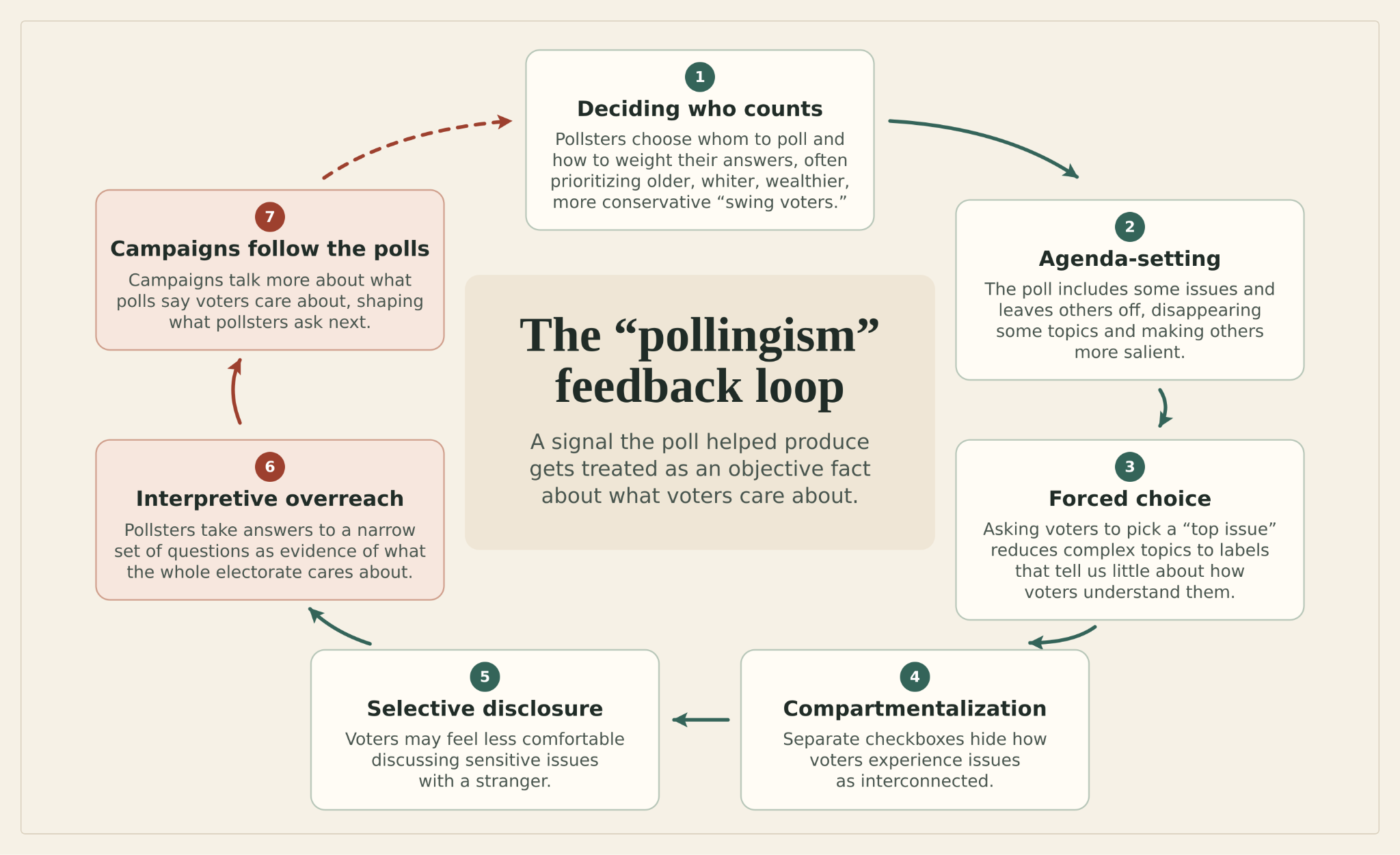
This error is deeply embedded in the framework of the kind of questions polls commonly ask: things like, “what was the most important issue in deciding how you voted?” The very terms of these kinds of questions about voter’s “top issues” assume a mechanical model of causality, as if voters were billiard balls and a single issue could knock them into one party’s column or the other.
But human motivation does not work like that. Voters view issues, politicians, and parties in relation to complex mental schemas that inform how they process information and make political choices. Those schemas, while deeply embedded and partly unconscious, can and do change. But they rarely do so because of a single “issue” or piece of information. Instead, a series of experiences accumulate until the old picture no longer makes sense and the pieces fall into a different pattern—what a guest writer for G. Elliott Morris’ Strength in Numbers recently referred to as a “Gestalt shift.”
In Althusserian terms, both individual voter motivations and collective electoral outcomes are overdetermined—shaped by multiple complex, overlapping, and often conflicting forces at once. As a Marxist, Althusser understood the economy as the most deeply determinant force “in the last instance.” But he also insisted that this “last instance” never arrives on its own—economic reality is always mediated by political, social, and ideological forces that shape how people actually experience and interpret their experience under (patriarchal racial) capitalism.
Given that, it’s hardly a revelation when voters list the economy as a top concern. In 2026, 84% of registered voters told Pew the economy was “very important” to their vote. But guess what? In 2024, 81% said the same. In 2022, it was 79%. In fact, in every federal election since 2008, at least three-quarters of voters have listed economic concerns as one of their top issues—and often the top one. Unsurprisingly, under the degrading conditions of late-stage capitalism, economic anxiety is a permanent feature.
But if “the economy” is always a top issue, it cannot explain why coalitions shift or why two neighbors paying the same prices for groceries reach opposite conclusions at the ballot box. The issue is not whether people care about their material well-being, which is a given, but which scapegoats, solidarities, moral frameworks, and worldviews shape how they interpret their material circumstances. Treating “the economy” as a standalone cause misses that entire political picture. It’s the worst kind of truism, one that assumes as an empirical given what is actually an active ideological battle.
A Losing Combination: Economic Populism and Cultural Capitulation
But something more insidious than a methodological error is happening here. Pundits and politicians aren’t just misreading the data, they are actively wielding the banner of “affordability” to advance a specific position in that battle over ideas. And a deeply dangerous one.
There is a growing pull to combine a left-wing agenda on narrowly economic issues with retreat to a supposed “middle ground” on issues like immigration, racial and gender justice, climate, policing, and voting rights.
The New York Times editorial board makes that argument quite explicit in a post-election op-ed titled “The Winning Combination.” They write:
“To win in places like Kansas, Ohio, South Carolina and Texas, Democratic candidates needed to persuade many voters who previously considered their party unacceptable.
How did they do it? The simplest summary is that they ran as economic populists and cultural moderates. [...]
On the economy, this year’s Democrats offered a strikingly populist message. They promised to raise taxes on the wealthy and criticized billionaires for corrupting the political system. They called for higher minimum wages, lower health care costs and expanded government programs. They raised concerns about artificial intelligence and data centers. They did not sound like the triangulating Democratic moderates of an earlier generation who championed Wall Street and free trade.
Nor did they sound like the progressives who shaped the party during the 2010s and early 2020s. This year’s candidates frequently denounced ideas—on immigration, energy, policing, gender and voter ID requirements—that have taken hold in elite left-leaning circles and alienated many working-class Americans of all races.
As an account of how Democrats actually won states like Texas and South Carolina, this diagnosis falls flat. For starters, it relies on a false dichotomy between “the economy” and so-called “cultural issues” that does not hold water either objectively or subjectively. (Objectively, abortion and immigration are as much economic issues as are housing and healthcare; subjectively, voters don’t sort their concerns into two bins labeled “cultural” and “economic.”)
But even if we accept the Times’s rigid categories on their own terms, the evidence flatly contradicts this story. As I argued in part one, Democratic voters, independent voters and Trump defectors overwhelmingly rated the future of democracy, ICE overreach, reproductive freedom, healthcare, and voting rights as critical factors in their vote. Far from demanding a retreat on social and democratic principles, the electorate that delivered November’s wins showed up because all of those issues were on the line.
As an account of how establishment pundits and politicians are making sense of the election’s meaning and its mandate, however, this story couldn’t be clearer. Having rediscovered a bolder class politics, centrist Democrats have concluded they must abandon their wavering commitments around race and gender. We are watching the “pollingism” feedback loop happen in real time: elites project their own preferred strategy onto the voters, declare it a mandate, and pressure the party to govern accordingly.
Within days of the victory, Senate Leader Chuck Schumer warned that his party lacked a blank check, insisting voters “did not give us the majority so we can do whatever we want.” Conservative House Democrats were even blunter, urging leadership to steer clear of trans rights, policing reform, ICE, U.S. support for Israel, and other issues they dismissed as “fringe” distractions. Even more progressive voices like Texas Governor-elect Gina Hinojosa have adopted this line, arguing that “fighting culture wars at this time is not a winnable fight.”
In some ways, this is nothing new. In 1992, Bill Clinton popularized the notion of “triangulation” between the “extremes” of both parties, pairing economic populism with conservative stances on crime, welfare, and race to neutralize Republican attacks. That was itself a rerun of 1968, when conservative Democrats blamed the civil rights movement for fracturing the New Deal coalition and urged the party to retreat from racial justice, feminism, and the peace movement to so-called “lunch-pail” issues. For nearly 60 years the prescription has remained nearly identical: define the working class as culturally conservative, treat economic justice and social justice as a zero-sum trade-off, and sacrifice the latter to win the former.
What is new is a bolder economic redistributive impulse than we have seen in many decades. Unlike the Third Way centrists of the 1990s, today’s establishment converts are willing to talk about taxing billionaires, raising the minimum wage, and taking on corporate monopolies. They have finally conceded that neoliberalism is a dead end. Thank God! Yet instead of insisting that everyone deserves both material security and basic dignity, they are pushing to pair economic populism with a sharp turn to the right on racial and gender justice.
In a much uglier register, that combination is the exact “brownshirt socialism” many of us on the left worried Trump and MAGA might actually try to govern with: a kind of white-nationalist welfare chauvinism that used tariffs, industrial policy, and selective social spending to shore up working-class support while waging relentless war on immigrants, trans and queer people, women, and racial minorities. In practice, of course, Trumpism never delivered the economic half of the bargain. Yet having just defeated that failed project, the leadership of our own front is flirting with building a softer, sanitized version of the same “combination”—just dialed down to a respectable volume.
To be clear, I don’t mean to suggest that today’s centrist Democrats are planning anything remotely comparable to MAGA fascism. But in the context of the latter’s massive assault on racial justice, gender equality, LGBTQ+ rights, and immigrants over the past several years, appeals to “moderate” on those issues—or simply stop talking about them—do not preserve some neutral center. They function to lock in the right’s ideological victories, cede moral terrain without a fight, and signal to vulnerable communities that their rights are negotiable. And they amount to an immediate betrayal of the very coalition that just handed Democrats this electoral victory.
It’s the Economism, Stupid
If this push were coming solely from party centrists and establishment pundits, it would be worrying enough. What makes the current moment far more troubling is that parts of the left have been willing to play along.
It is understandable why many leftists are eager to push Democrats on a bold economic agenda right now. Too often, however, that impulse is sliding into a “class-first,” race-blind populism that echoes the New York Times’s “winning combination”—treating struggles over racial justice, reproductive freedom, trans rights, and immigrant solidarity as distracting “culture wars” to be shelved in favor of a pure message on the cost of living. In doing so, its proponents fall straight into the classic Marxist error of economism—the belief that material conditions automatically generate political class consciousness on their own, and that once people’s pockets are full, everything else will sort itself out.
It helps to distinguish between two variants of this error: right economism and “left” economism. Right economism treats race and gender chauvinism among segments of the working class as a permanent fact of nature rather than an ideology to be contested and changed. Worse, it relies on a sleight of hand that collapses “the working class” into conservative, white, blue-collar men—erasing the women, queer people, and workers of color who form its actual majority. Taken together, those assumptions lead straight to accommodation: stick to bread-and-butter economics, ditch “woke” social values.
Nowhere is such right economism more relentlessly evangelized than by the Center for Working-Class Politics (CWCP), whose director Jared Abbott and research associate Dustin Guastella have spent the past year publishing version after version of the exact same argument in The Guardian. Drawing on the kind of message-testing “pollingism” critiqued earlier, they celebrate “Bernie-Dog” candidates who pair economic populism with rightward turns on racial and gender justice, explicitly urging Democrats to abandon “professional-class ‘woke’ social values” and drop race-class narrative frameworks because they supposedly come off as a “condescending sermon” to working-class voters. (One wonders: which ones?)
CWCP has been advising the Working Families Party (WFP), which spent 2026 canvassing around its new “Willing to Fight” pledge, a platform built from what it claims are the “most popular and unifying“ issues for working-class voters. Based on issue polling, WFP decided “unifying issues” meant kitchen-table relief and taxing billionaires—and not immigrant rights, reproductive freedom, racial justice, war, and authoritarianism. WFP is an essential organization—indeed, one many of us have long hoped could anchor a new nationwide political party. Which makes it all the more troubling to see it embrace a narrow, “broke populist” playbook that leaves many of the central fronts of our current anti-fascist fight off the clipboard altogether.
Where right economism exaggerates the intractability of race and gender chauvinism, “left” economism acts as though those battles have already been won. Leftists making this mistake usually care about racial and gender justice; they simply assume those commitments are already baked in. As a result, they imagine a naturally unified, solidarity-driven, multiracial working class already marching shoulder-to-shoulder against the billionaires.
We can see this wishful thinking even among staunch allies doing important organizing. Take the slogan May Day Strong has used to rally people this election cycle: “Workers Over Billionaires.” As an aspirational slogan, that’s not half bad. As a description of the actual political terrain we are fighting on, it misses the mark. The 2026 midterms were not some proto-socialist showdown between a united working class and a united capitalist class. That may be the battle we want, but it is not the battle we are currently in.
May Day Strong’s concrete demands are far from economistic. Alongside “Lower Prices, Higher Paychecks” and “Tax the Rich,” the coalition has consistently pushed key social and democratic demands like “expand democracy,” “No ICE, No War,” and more recently “a path to citizenship for our immigrant neighbors.” Those slogans are great—but they don’t quite fit under a banner that reduces the scope of our current fight to a clash between bosses and workers.
Reconstruction 3.0 is going to be Crazy
Today’s struggle is not a pure, two-sided class war between capital and labor. It is a fight to defeat a reactionary white republic and build a genuine multiracial democracy—itself the indispensable precondition for any socialist future.
This is the third great chapter in that fight.
Twice before, mass freedom movements waged long marches that broke open authoritarian, white supremacist coalitions and carried the country closer to a genuine multiracial democracy. After the Civil War, the First Reconstruction expanded democracy for Black and poor white Southerners alike, and sparked wider struggles for land, labor rights, public schools, and women’s suffrage. A century later, the Civil Rights and Voting Rights Acts anchored a Second Reconstruction that became the beating heart of a broader democratic revolution spanning feminist, queer, Chicano, Indigenous, and anti-war movements. In both periods, economic dignity and multiracial democracy advanced together—not as competing priorities, but as intertwined components of the struggle for liberation.
Yet twice before, white supremacist elites engineered a violent “Redemption“ to restore one-party minority rule, eventually carrying that revanchist project all the way to the White House. After the first Reconstruction came Jim Crow terror and the gutting of the Reconstruction Amendments. After the second came a decades-long backlash that started to flip Southern statehouses—and, once the Roberts Court gutted the Voting Rights Act, enabled the New Confederacy to lock in minority rule and launch a nationwide counter-revolution culminating in Donald Trump’s presidency.
If that is the battle we are now in, with the sides we are on, then struggles for racial justice, gender equality, immigrant rights, and voting rights are not secondary add-ons or “culture war” distractions. They are key components of the central battle.
What are the fronts in this fight? On one side stands the MAGA New Confederacy, forged out of an alliance between the most reactionary sectors of capital and a white Christian-nationalist mass movement with a broad cross-class base. On our side stands a broad pro-democracy front bringing together virtually all of Black America, most other people of color, many women and virtually all LGBTQ+ people, and young people. Like the MAGA movement, our front is a cross-class coalition—spanning the most advanced sections of the multiracial working class as well as progressive sections of the professional and upper classes.
Finishing what the first two Reconstructions started requires rallying this rainbow coalition around an unapologetic governing program for a Third Reconstruction. It must include:
Bold economic redistribution: Taxing billionaires and breaking up corporate monopolies to guarantee universal healthcare, affordable housing, free childcare, paid family leave, higher wages, and strong unions.
Unapologetic racial and gender justice: Safeguarding reproductive freedom and bodily autonomy, defending trans and queer people from state persecution, dismantling systemic racism in policing and the economy, and replacing mass deportation with a humane immigration system and a pathway to citizenship.
Full accountability for MAGA’s crimes: Using congressional power, state attorneys general, and the courts to investigate, prosecute, and dismantle the corruption, lawlessness, and authoritarian abuses of the Trump regime.
Deep structural democratic reform: Overhauling our rigged political system (abolishing the filibuster, passing federal voting-rights protections, curbing the rogue Supreme Court, statehood for D.C. and self-determination for Puerto Rico, and getting corporate money out of politics) so a multiracial majority can actually govern and protect these gains.
Each of these planks is dependent on all the others. In a country where racial and gender divisions have always been used to block universal social programs, economic gains cannot be won and held without confronting white supremacy and patriarchy. At the same time, racial and gender justice cannot be fully realized on top of poverty and corporate exploitation. And neither economic progress nor civil rights can survive inside a rigged constitutional system designed to entrench minority rule. Finally, none of those reforms will hold if the forces that tried to overthrow multiracial democracy pay no price.
Saying that these struggles are interrelated is not to suggest that pro-democracy voters are united in their understanding of them. Some voters went to the polls seeing the fights against billionaire oligarchy, white Christian nationalism, and authoritarian rule as deeply connected. But many didn’t, and others were on board with some parts of this project while deeply skeptical of, or even opposed to, others.
Those who already grasp how these struggles are bound together are, in the truest sense of the word, woke.
Long before the right turned it into a slur—and before too many on the left sheepishly surrendered it—”woke” came out of the very Black freedom traditions that powered the first two Reconstructions. By the 1960s, that ethos of “waking up” became the template for women’s and gay liberation “consciousness-raising”—and inspired revolutionaries like Fred Hampton to build the original Rainbow Coalition, uniting Black, Latino, and poor white workers around how capitalism and racism divide and conquer them all.
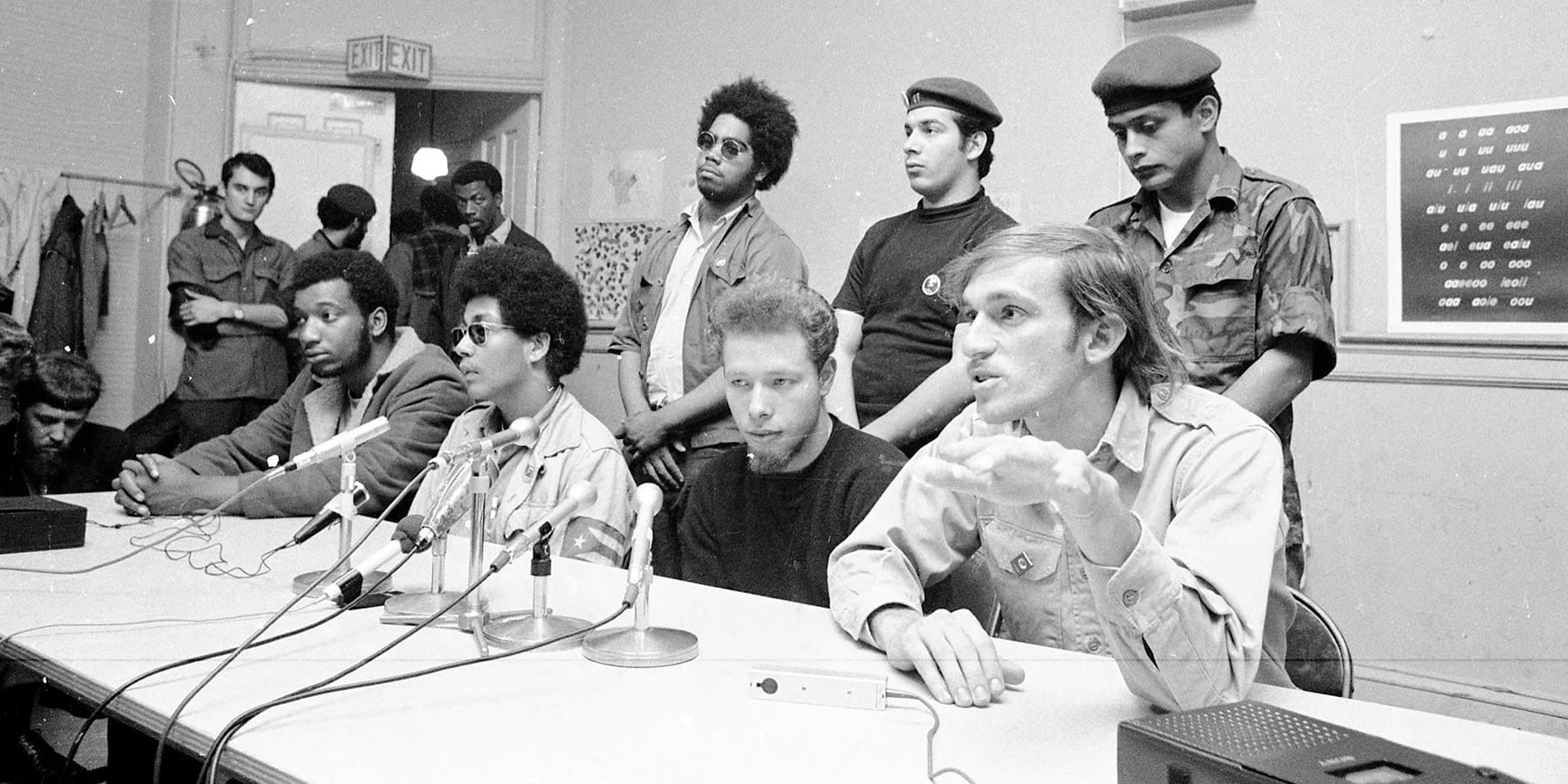
Being woke was never about policing language or chasing moral superiority. It meant cultivating clear-eyed political consciousness: staying alert to systemic injustice, understanding how power actually operates, and seeing the hidden links between forms of oppression.
That is the exact kind of consciousness-raising our moment demands. “Woke” is not a distraction from working-class politics—it is the indispensable glue of real solidarity, and the only way a diverse majority learns to fight as one. A rejectionist front built on separate grievances can win an election, but it cannot hold power. Only a movement awake to every front of this fight can turn November’s anti-fascist “no” into a “yes coalition” that can lead the battle for a Third Reconstruction.
So we need the people who are woke to stay woke—and to get to work waking everybody else up.
Bennett Carpenter is a queer Southern organizer, trainer, and movement strategist. They are a member of the National Executive Committee of Liberation Road.
Want to help build that “yes” coalition? On Tuesday, December 8 at 7 PM ET, Convergence and Liberation Road are hosting Shaping the Third Reconstruction. Featuring Angie Nixon, Braxton Winston, Loan Tran, Kunoor Ojha, and Genevieve Rand.