


I often tell friends that writing is like traveling down a two-lane highway. One lane is for fiction while the other is for nonfiction. Although you, the driver/writer, may think that you can alternate between the lanes, there are “tickets” that you can receive for changing lanes. Both the publishing industry and much of the public resist the changing of lanes by writers.
I encountered this when I took a leap into the world of fiction. There were many people who looked at me, as if to say, Do you now have time on your hands for frivolous activity? I have witnessed the opposite, however, where fiction writers are viewed with jaundiced eye for venturing into nonfiction. It is as if these were not two lanes but parallel roads separated by an invisible force field.
Entering into fiction was not a tremendous leap. It required, however, forcing myself to treat fiction as a legitimate space for a leftist. This may sound odd given the tremendous history of leftist fiction writers, e.g., Dashiell Hammett, Octavia Butler, Walter Mosley, Kim Stanley Robinson, Ursula LeGuin. It is also odd since most leftists I know read this or that genre of fiction. Yet there is this approach or assumption that seems to be an almost official stance by too many leftists that fiction should be reserved for the greats (such as those mentioned above) and that real activists should focus upon the challenges of the moment facing the Left and popular forces.
My first venture into fiction—as an adult—resulted in humiliation when an agent ridiculed my manuscript and encouraged me to abandon my interest in the field. My second venture resulted in The Man Who Fell from the Sky (Hardball Press), which received a great welcome. This was followed by a sequel (published in April 2023), The Man Who Changed Colors (also from Hardball Press), which received an even greater response.
Why take the chance to write fiction? Why venture away from nonfiction? Why grapple with humiliation? Simply put, I had a story to tell, and I believed this story could best be told via fiction. In fiction my aim was to reach audiences that I could not tap with my works of nonfiction. But I was also looking to tap into a different part of me, another dimension, so to speak.
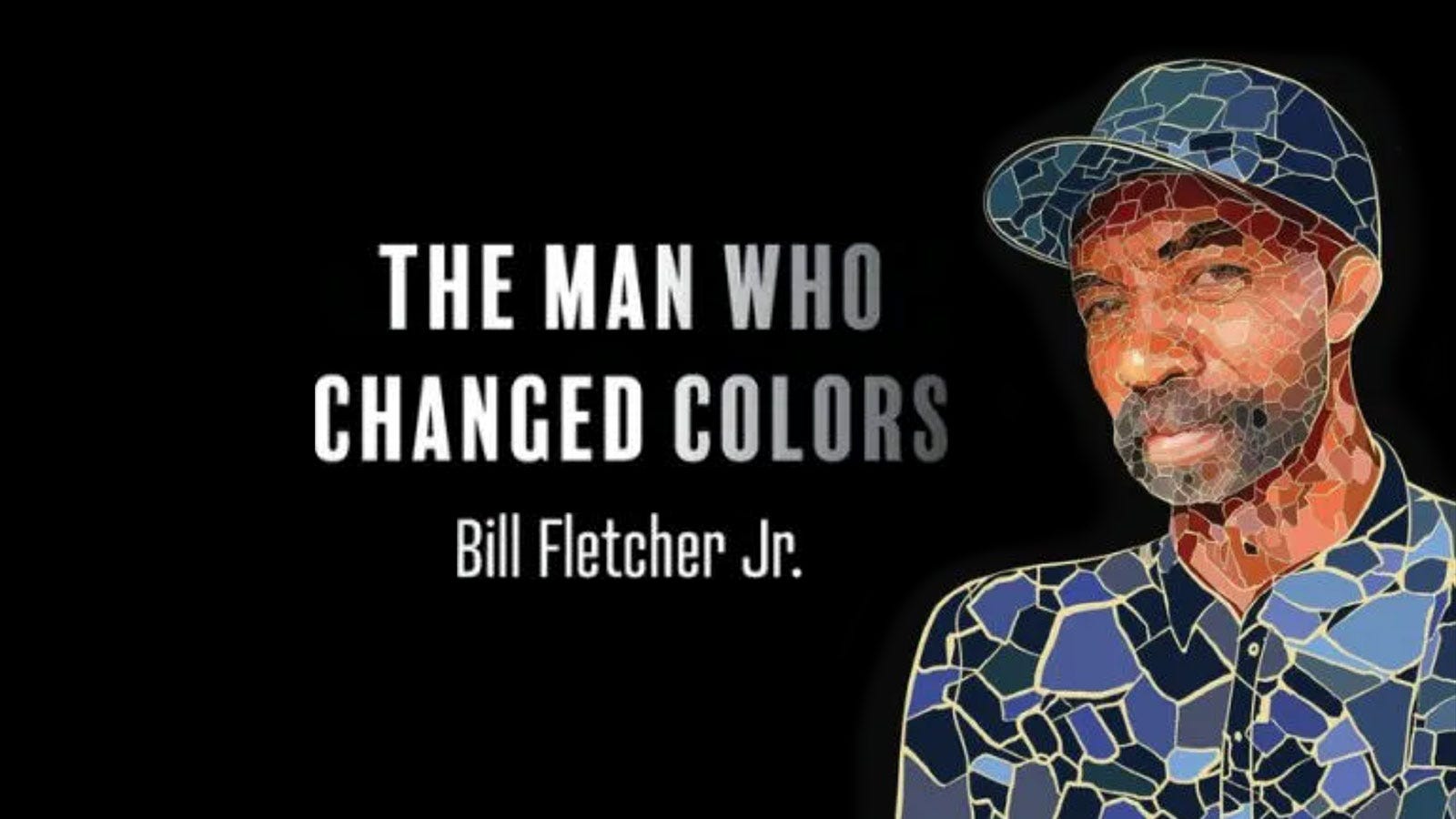
My two novels revolve around race, justice, and revenge. They are centered on a Cape Verdean American journalist in Cape Cod, Massachusetts, who, in the first book, stumbles into a murder with roots in an incident in World War II. In the sequel, the same character—David Gomes—begins investigating what appears to be an industrial accident in a shipyard, only to discover that it was not an accident, and the victim was not who he claimed to be.
Through these books, I could look at the experiences of the first post-1492 African population to come to North America voluntarily. Coming to North America, they were, from the nineteenth century through 1975, colonial subjects of Portugal. Here they experienced not only colonialism but a form of white supremacy quite different from that introduced by the British in the thirteen colonies and perpetuated by so-called white Americans. Thus, the Cape Verdean experience helps to open one’s eyes to the complexity of “race” and racism, and offers an alternative to the sorts of paradigms we are used to in the United States.
I have been asked, on many occasions, Why not write a book about Cape Verdeans? The answer is as straightforward as the question: Because I am not an expert on Cape Verdeans; there are important books already in print about Cape Verdeans; and there are many people who would not read a nonfiction book about Cape Verdeans. Yet here is the fun part: I encountered numerous people who, after reading my novels, now wish to read more about Cape Verdeans!
Good fiction is rooted in a story or point that the author wishes to convey. It may be a lesson; a point of morality; or a question with which the author has been grappling. It cannot be rambling, however. Sometimes people tell stories, and the point is less than clear. That won’t work in writing fiction. That does not mean that every page must be action-packed, however. The writer must keep asking himself/herself, Why should someone read this?
There is one final point. Most people think through the vehicle of stories. They may make them up or they may tie together various facts, events, etc., into a story. That story may not make sense to anyone but themselves, but it helps that person think about the world. I know few people who think through the vehicle of isolated facts. Given that, fiction takes components from life and/or imagination and provides a way of thinking through a dilemma, experience, fantasy, etc. This is what makes fiction so powerful and also what makes it the site of continuous ideological struggle.
----------------------------------------------------------------------
Bill Fletcher, Jr. has been a socialist for most of his life. He is also a trade unionist, international solidarity activist, and writer of both fiction and nonfiction. @BillFletcherJr; billfletcherjr.com