

by Juliet Ucelli
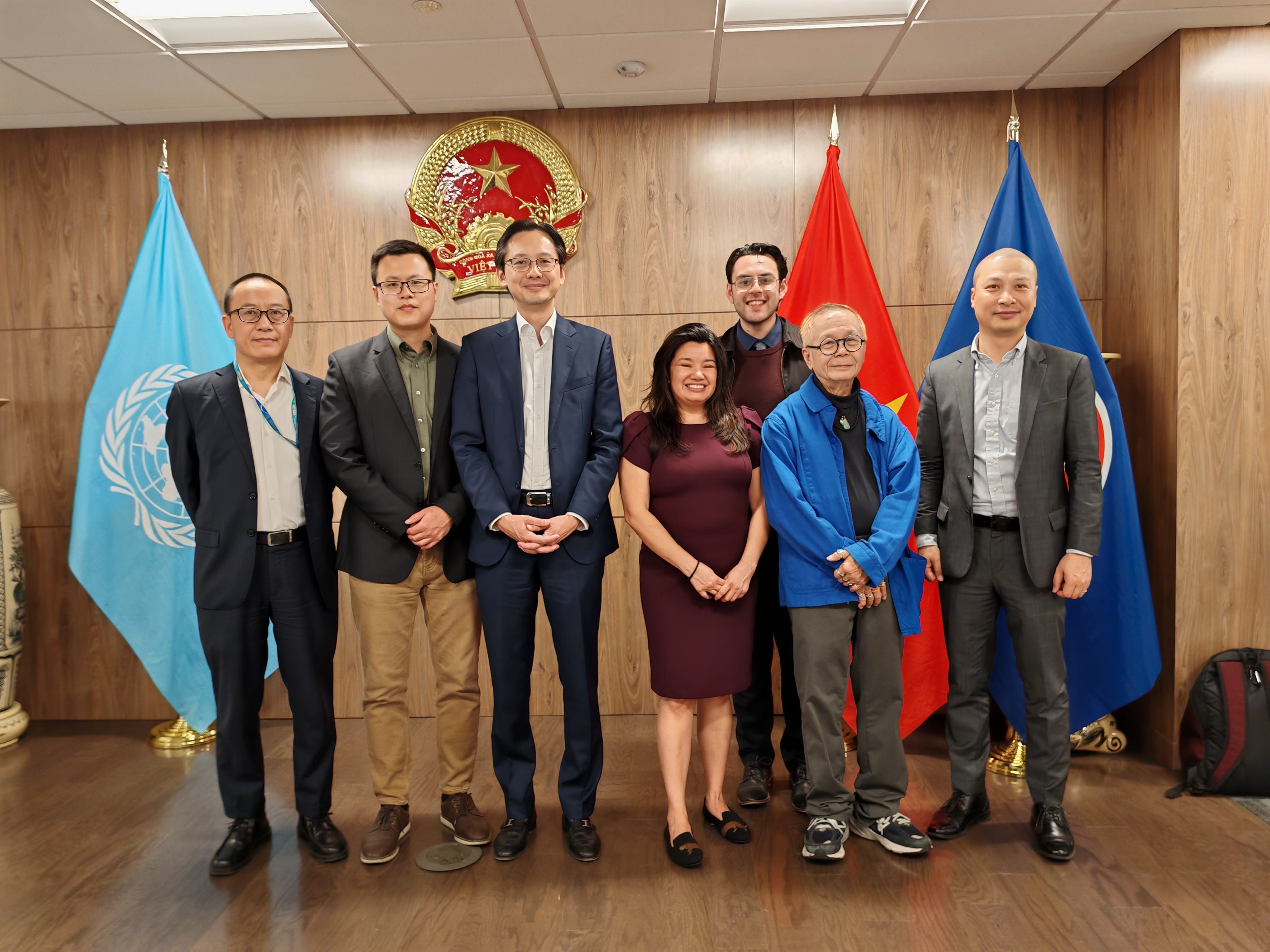
On April 23 in New York City, Vietnam’s United Nations Representative Do Hung Viet briefed US friends about the outcomes of the Communist Party’s 14th Congress (held every five years) and the first session of the 16th National Assembly. He also took a wide range of questions about Vietnam’s analysis of and responses to recent world events.
By 2030, which is the 100th anniversary of the Communist Party’s founding, Vietnam aims to move from being a low middle income country to a high middle income country with a per capita GDP of $15,000. This will entail expanding beyond labor-intensive output (many of our clothes in the US bear “Made in Vietnam” labels) to more scientific and technical products, with incentives for an innovative private sector under the state’s leading role. And the congress vowed to do this while protecting the environment, a primary focus of the congress for the first time; improving workers’ lives and access to goods, education, and health care; and continuing to strengthen the party, fight corruption, and teach cadre to be maximally responsive to public needs.
Advancing these goals requires juggling many contradictory pressures. Ambassador Do noted the challenge of “creating a better playing field for the private sector in terms of interest rates and other guarantees, while not widening income inequality.” It’s encouraging that over the past 50 years, Vietnam has a better record on doing this than any other country. Data centers for technical production will require at least a 12% increase in power generation, so there are plans to increase the use of sustainable energies like solar and offshore wind as well as nuclear power. The vision is of a just energy transition and becoming carbon neutral by 2050. Vietnam is switching to electric vehicles and building the required infrastructure of charging stations. People working in fossil-fuel based, dirty energy will have retraining opportunities.
Of course, Vietnam has never been focused only on internal well-being. The 14th congress explicitly elevated international integration and diplomacy to be on par with national defense and security. And in fact, as Ambassador Do noted, “Diplomacy and the international solidarity of people’s movements have played a crucial role throughout Vietnam’s history in defending the nation and gaining independence.”
At the end of the briefing, Ambassador Do addressed questions from those in attendance. When asked how the US-Israeli war on Iran was affecting Vietnam, he stated that “The worst effect of the US-Israeli aggression is undermining a rules-based international order, violating agreements like the UN Charter. This threatens the sovereignty of all nations and creates a precedent for more aggression.” Coming after punitive tariffs, the war has also hurt Vietnam’s economy by blocking much trade, especially in crucial energy and fertilizer. “Vietnam has oil but needs to import refined oil; we are trying to control the price internally so as not to hurt production and workers,” he said. The shortage of jet fuel has meant that many commercial flights won’t come into Vietnam because they fear not being able to refuel and leave.
Another attendee pointed out that Ambassador Do was about to preside over the 11th Review Conference of the of the Treaty on the Non-Proliferation of Nuclear Weapons (April 23-May 22). Vietnam’s representative was entrusted to do this by the 191 States-parties (signers) to the Treaty, with the endorsement of the Non-Aligned Movement, in recognition of Vietnam’s consistent commitment to multilateralism, nuclear disarmament, and constructive international cooperation.
Ambassador Do emphasized that Vietnam is also deeply committed to extending international solidarity, especially to Cuba. “We’re sending equipment for four solar power plants that can power 80,000 households and we are helping them to start growing rice, for which Cuba has good conditions. We remember how the Cubans helped us with a friendship hospital, building the first new hotel after independence, and sending us dairy cows.”
A People-Centered, Sustainable Society is Possible
Amidst heightened US aggression, international hostilities, and rampaging capitalist greed, the Socialist Republic of Vietnam shows us that it’s possible to build a more people-centered, sustainable society—coming out of massive destruction and suffering. To secure its independence, Vietnam defeated two great powers, France and the US, which bombed it with more tonnage than dropped in all theaters of World War II combined, and poisoned its land and millions of people with defoliants (Agent Orange). Since then, Vietnam has established food self-sufficiency, over 90% literacy, and universal elementary and secondary education, and raised life expectancy to 75 years.
As our movements in US communities, campuses, and workplaces come to recognize the linkage of anti-human policies in the domestic and international arenas, it’s crucial that we support Vietnam’s right to self-determined internal development and unhindered participation in global trade, and unite with its efforts toward global peace and cooperation.
Juliet Ucelli helped to organize the NYC celebration of the 50th Anniversary of Peace and Social Progress in Vietnam, and serves on the International Developments Work Team of Liberation Road.
Excellent vision and report about our Vietnamese friends. I didn’t know this about Vietnam’s being the most advanced in creating a better playing field for the private sector in terms of interest rates and other guarantees, while not widening income inequality. I also had the pleasure of being a few rows behind several high ranked Vietnamese officials in Cuba’s 26 de Julio celebration in 2024. They were distinguished guests of honor.
How you doing comrade hope things are good. Please subscribe me to New Liberator and keep in touch .
Muata Greene