

by Alex Berg
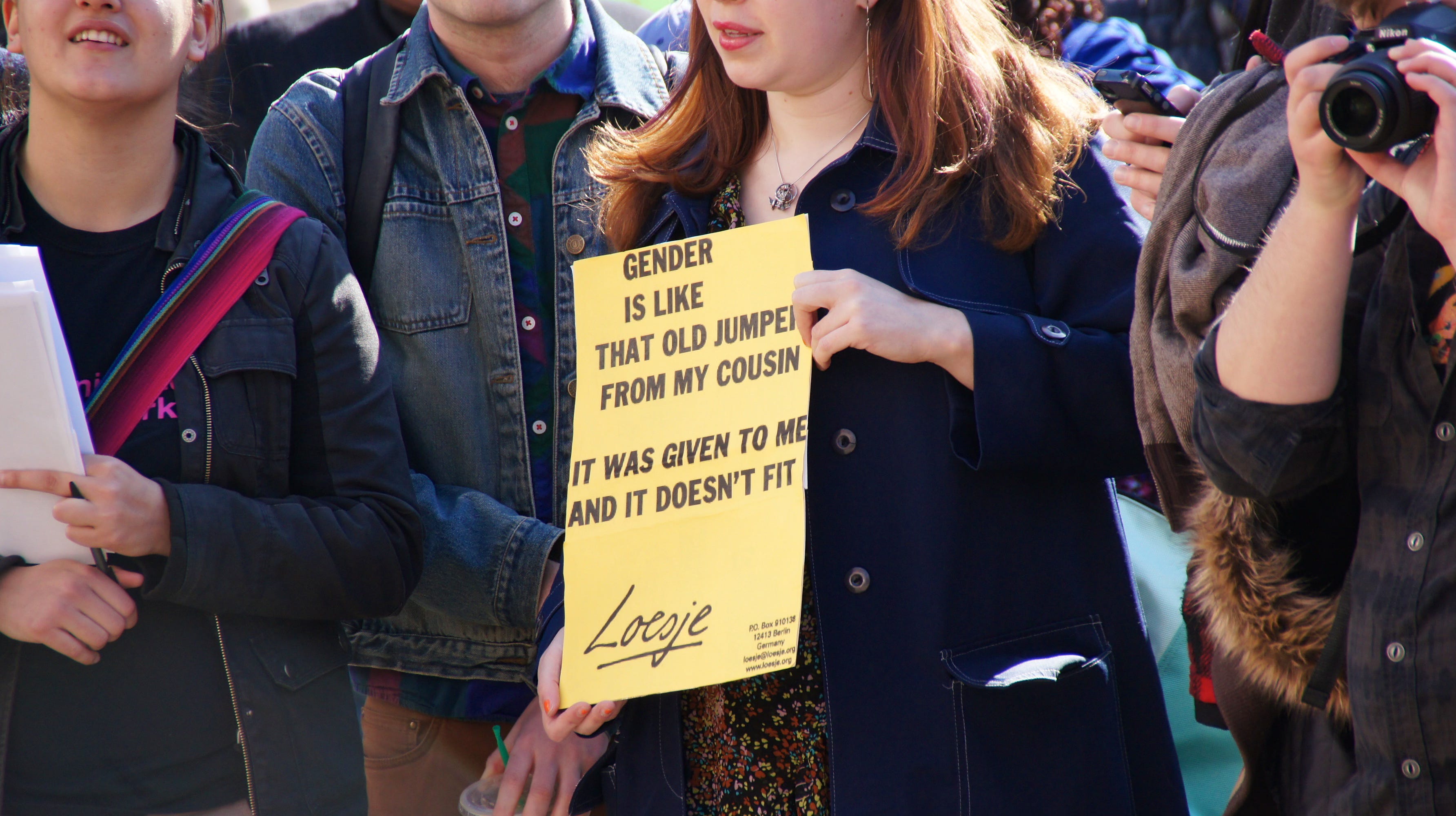
In 2012, in the twilight of her life, Grace Lee Boggs reflected on the importance of thinking through the how of revolution and change. “The time has come for us to reimagine everything,” she wrote. But how, she asked?
“We reimagine by combining activism with philosophy. We have to do what I call visionary organizing. We have to see every crisis as both a danger and an opportunity. It’s a danger because it does so much damage to our lives, to our institutions, to all that we have expected. But it’s also an opportunity for us to become creative; to become the new kind of people that are needed at such a huge period of transition.”
I grew up in Michigan, in a small, industrial outpost of Detroit and have long been inspired by Boggs, her work, words, and legacy. Today, I live in one of the “blue dots in a sea of red” in the US South. I have two little kids: 11 and 9. Since they were little my partner and I made the choice to reimagine the family and gender. To challenge traditional concepts of gender and raise kids who have the tools to analyze its construction and reimagine it in any way possible. While there is danger, fear, pain, and grief in this reimagining, there is also opportunity.
My oldest kid, whose gender was identified at birth as a boy, wore skirts and dresses from a young age. As soon as they had the tools, they let us know that they were non-binary and/or (some days) a girl. They are still gender fluid: sometimes non-binary, sometimes a girl, never a boy. My youngest was gendered as a girl at birth. As she’s watched her sibling challenge norms, stand up for themself at school, and create community with other non-binary and trans kids, she’s also a gender traitor in many ways.
When more children are taught to question, analyze, and reject inherited ideas–about gender, race, the value of their labor, and more—we create new forms of resistance and revolution.
Political Sex Education
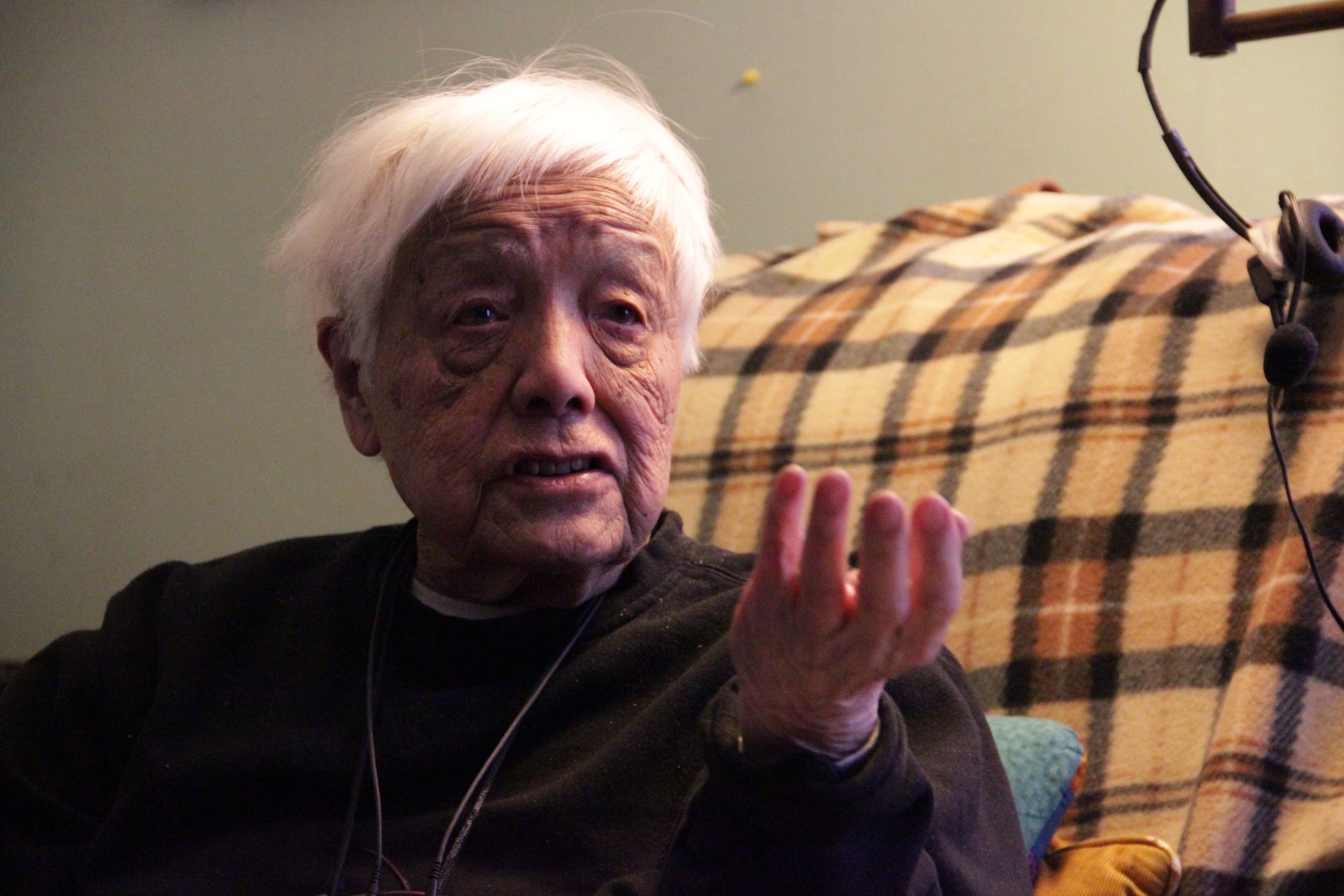
From an early age I tried to talk about both “gender” and “sex” with my children through my analysis of a Marxist-feminist lens on these questions. “Gender” and “sex” are both socially mediated categories that have existed in different forms under different time, place, and conditions. But under capitalism and patriarchy, gender essentialism serves to uphold a gendered division of labor where people socialized as “women” take on specific subordinated roles in a gendered hierarchy that facilitates labor extraction, exploitation, and ruling class control. There is nothing obvious or “essential” about this gendered hierarchy; instead, it must be actively constructed through a process of “gender disciplining” that typically begins at a very early age, and which teaches children both what gender they “should” be, and what that means about how they should think, feel, and act. That is why the French socialist feminist Simone de Beauvoir famously wrote that “one is not born, but rather becomes, a woman.”
Like some other early feminists, Beauvoir distinguished this culturally constructed gender binary from biological sex, which she incorrectly imagined to be a ”natural” binary based on a stable set of fixed physiological features. But what we now know is that biological sex is a complex, multi-dimensional construct made up of not one trait but many. None of these traits sort neatly into a binary; instead, most of them conform to a bimodal bell curve distribution. For example, people labelled “male” are, on average, taller than those labelled “female,” but there are plenty of very tall females and very short males. The same applies to virtually all the traits we associate with biological sex: gametes, chromosomes, hormones, gene expression, genitalia, breast development, facial hair, etc. Individuals who fall within the curve labelled “female” on one trait may (and often do) fall within the “male” curve on another, and somewhere in the middle on a third. And people’s expression of these traits can and does shift over time—based on many factors, from aging, to environment, to medical treatment. Transphobes argue that, because biological sex is (supposedly) binary, so too are cultural gender roles. In reality, the causal relationship flows the other way around: it is only because the gender binary is so deeply inscribed in our cultural consciousness that people look at this heterogeneous set of traits, all of which exist on a spectrum, and imagine that they sort neatly into two categories. Biological sex is, quite literally, non-binary.
With my kids I obviously put any attempt to complicate and educate around sex and gender in very different language, usually through storytelling. I’m not sitting them down for lectures. Kids hate lectures and like to rebel against their parents’ ideas.
When my kids were young (3-5) challenging the binary and patriarchy was simpler. I encouraged them to pick outfits, colors, toys, and other forms of self expression they were drawn to. If I was with them and we overheard someone say something like: “boys should have short hair,” or “pink is a girls’ color,” I might later ask them what they thought about that and show them pictures from 100 years ago when long hair and pink were socially acceptable for “boys.” But we also found ways to tell stories that illustrated how the ruling class will take advantage of any difference they can to exploit some groups of people more harshly than others, including women and anyone who defies traditional patriarchy and the notion of gender essentialism and the binary. We taught them to stand boldly in their confidence that they have a freedom to self-express on gender, but to also be aware of intersectionality and capitalism’s role in creating, maintaining, and holding up limiting ideas about gender.
Giving Children a Choice about Gender
What happens to kids given a choice? It probably looks different for everyone, but I have two kids and one is a trans girl and the other is non-binary. In my experience, when you give young people a choice, they reject the limited, oppressive, reactionary gender essentialist view. There have been many revolutionaries before me who have learned important lessons about bringing intense politics into parenting. But what about bringing children up in this world is not political? I’m sure I’ve gotten some things wrong, but I’m trying to do it differently. I do a lot of work on training my kids to understand racialized capitalism and see themselves as heirs to John Brown and other race and class traitors, while keeping it age appropriate. I hope that as more young people get a choice about gender, and therefore see it for what it is in the capitalist system (with all the contradictions that exist) they will have a more organic and clear path to the Marxist/revolutionary tradition.
When I started on the path of raising kids who challenged the binary, I had intense personal feelings of grief about the restriction and alienation that came from my own socialization. I present and mostly live as a cis woman married to a cis man, but I’m also queer: I’m attracted to people of all genders and I never have fit comfortably in the gender binary. But being raised under racialized and gender exploitative capitalism as a white person told she was a woman, I did not have the tools to critically interrogate those categories. I didn’t find queer family or radical, revolutionary political education until my late 20s. While my lived experience taught me that capitalist structures rely on policing sexuality and upholding the gender binary to ensure social reproduction, social conditioning, and cheap or free labor, I didn’t have the collective space through which to live—or even coherently imagine—alternatives.
When I first read my very little kids books like “The Gender Wheel,” “It Feels Good to Be Yourself,” and “Gender Rebels,” I felt immense grief for a younger version of myself. It was only through consciously raising my children to have choice, freedom, and intention around their gender identity that I was really able to give myself permission to have more choice and freedom around my gender identity as well. For the first time, I was able to really understand and say to my kids: “Because I was born with these body parts, people told me I was a woman all my life. I’m actually not sure I am a woman as this is defined. Some days I’m non-binary. Maybe every day.” That was years ago. They still sometimes say: “Mama, what gender are you today?” and it always brings me to tears. More and more, the tears are less ones of grief over my earlier lack of choice around gender identity and more for the joy I’ve found in queer community, revolutionary practice, my own identity, in parenting gender rebels, and in reimagining the family and gender.
That said, when Trump was elected and more emboldened and public attacks on trans/queer people ramped up, I questioned a lot of my choices. I am often living in fear for my children, and a scared part of me wonders: “Should I have approached discussions of gender with my kids with such gusto and confidence?” While I know they will learn the extent of the hate soon, I have been avoiding talking to them about the vicious attacks on trans people, particularly on children. My children are growing to be resilient, but they aren’t there yet. It is very difficult to weave a story that can still empower and give kids hope while telling the truth about the fear, alienation, and loss of power under extractive capitalism that has driven many everyday people living around us to give voice to a ridiculous myth about trans kids in bathrooms.
The state we live in has outlawed trans participation in youth sports; far-right legislators are actively trying to pass bans on puberty blockers and other trans-affirming care. Not only has my kid been prevented from playing the sports that they love at school, but harassment and attacks have ramped up. At the nearby middle school, when a non-binary student told a substitute teacher about their preferred pronouns, the substitute responded aggressively: “Soon it will be against the law for you to force me to use they/them pronouns.”
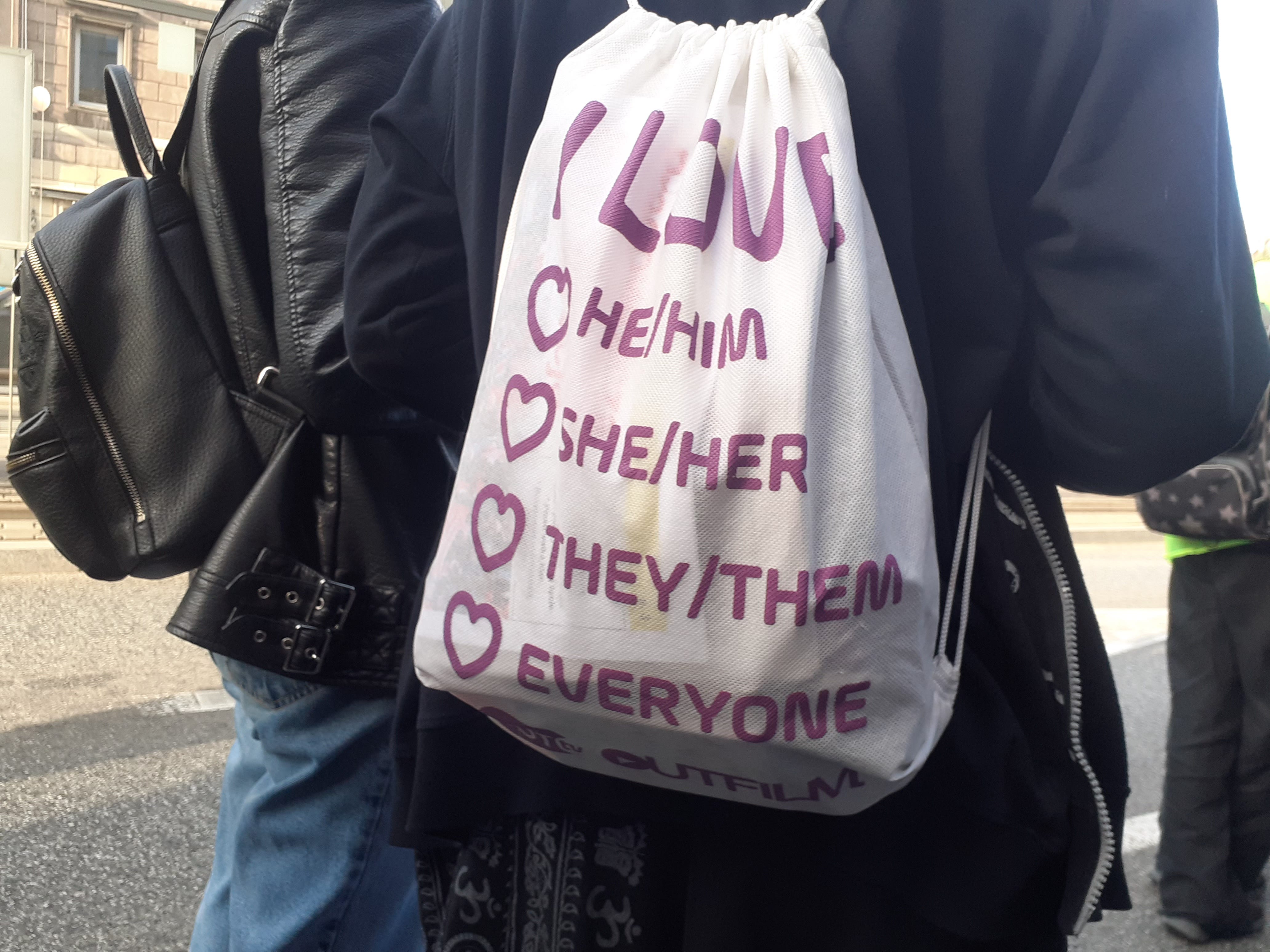
Organizing Schools and Parents to Support Trans Youth
Our kids go to their neighborhood public elementary school. Up until last year, the elementary, middle, and high schools we are zoned for have been ok on these issues. Not great, but ok. There isn’t an “all gender” restroom, but our kids can go to the teachers’ bathroom or choose the girls’ or boys’ restroom. Individual teachers have all been great, even if they have a learning curve. Our principal has been largely supportive, although we’ve had to do some organizing to move her on small things like not saying “girls and boys” every single time she does the announcements. The school even created a little support space for gender queer kids where they came together from all grades and created a space to share ideas, struggles, and joy, and to encourage one another. This program was what gave my kid the confidence to start wearing dresses and skirts to school, and they still light up every time they see the older non-binary and trans kids from that group.
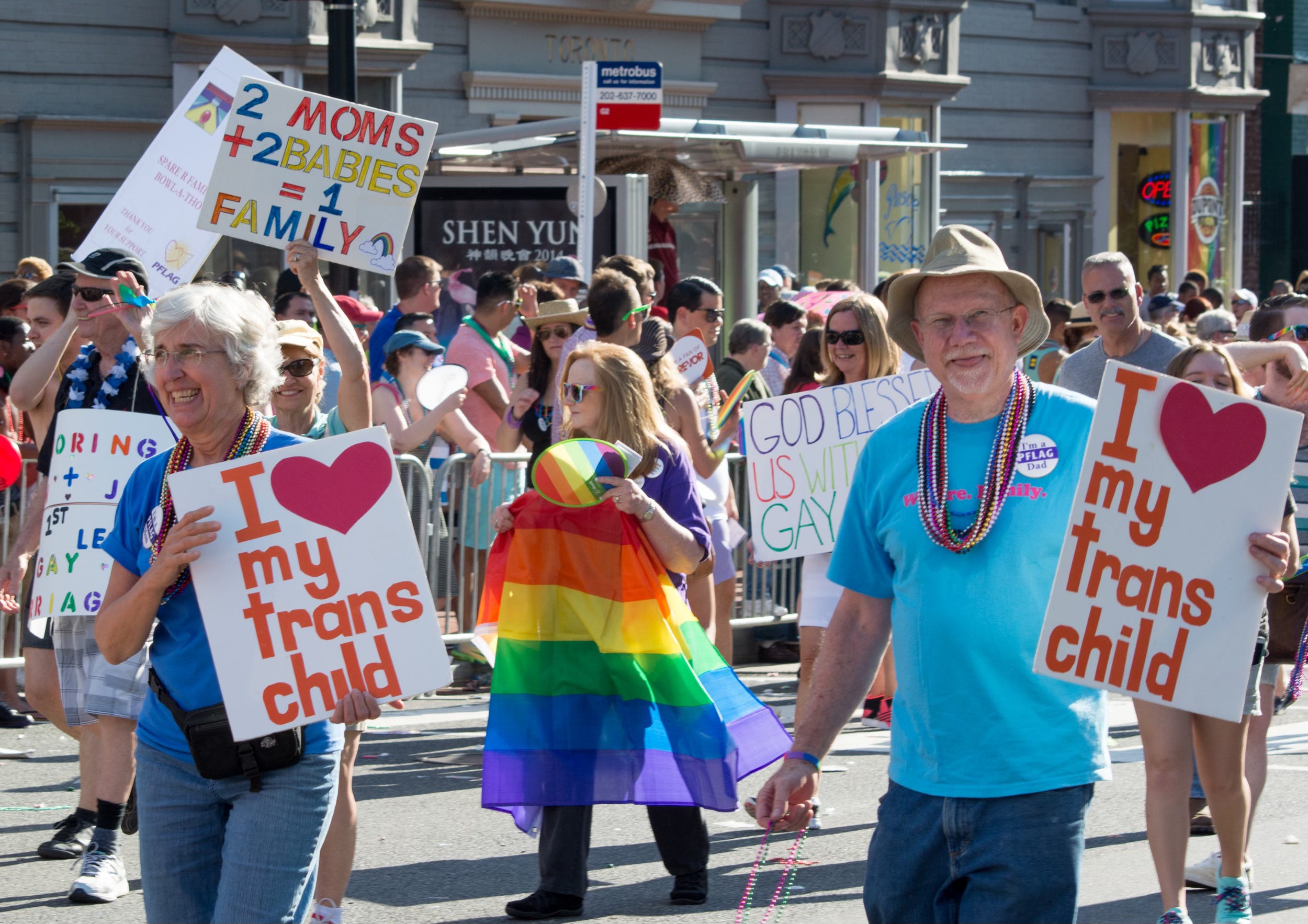
During the 2024-2025 school year, that program was supposed to begin right after the November election. When December hit and we hadn’t heard anything, we started to ask when it would start. Anticipating that they might sunset it out of fear (sometimes termed “anticipatory compliance”), I tried to meet with supportive staff in person and ask openly what was preventing the program from starting. They continued to say it would start soon, but offered little additional information.
Over the years we’ve worked to create a small group of parents with LGBTQIA+ kids or who are queer themselves. When the attacks on trans kids and public schools ramped up after the election, we started meeting again. At first it was a challenging organizing space, because there were a lot of different ideas about what we should do in response to attacks, many of them fear driven. Initially the majority of parents wanted to talk about things like destroying any records where our kids had they/them pronouns documented in the system, or figuring out which private schools we should collectively flee to, or whether we should all homeschool. It was hard to continue to push the line amongst parents with enough resources to flee the public schools that the public school fight was important. Even among the least economically secure, there was still an impulse to move outside of the city, piece together jobs and money, and homeschool.
As groups like the ACLU provided templates to send letters asking superintendents, school board members, and principals to affirm their commitment to supporting trans and non-binary students and the state legislative session started, we were able to focus more on organizing in these spaces to move past fear-based defensive reactions towards proactive advocacy. We worked together to ask administrators and teachers at our school to restart the club for trans/gender-nonconforming kids and successfully got the school to restart the club!
Our members have attended national webinars on topics like finding supportive medical providers, and many of us have gotten plugged into other local/national groups. Through these structures we offer support to parents dealing with this moment’s hardest challenges: courts taking queer kids away from the supportive parent and giving the non-supportive parent full custody; navigating the medical system as major hospitals we all relied on announce they will no longer provide gender-supporting care; emboldened attacks in public schools, and more. The organizing work is slow and challenging, but it is giving us all hope and community in a very dark and difficult time.
Alex Berg originally hails from the Midwest and currently lives, works, parents, and organizes in the South.
"There is nothing obvious or “essential” about this gendered hierarchy; instead, it must be actively constructed through a process of “gender disciplining” that typically begins at a very early age, and which teaches children both what gender they “should” be, and what that means about how they should think, feel, and act."
Spot on.
So important to reflect on the gendered norms that children are taught from a young age. There is nothing natural about the ways children are separated from birth by gender. They grow up being told from a young age that they have to act a certain way, be a certain type of person, do a certain type of work. So many reach adulthood with a very constrained path in life and little room to think about who they are and what they want for themselves. So many adults have few or no friends of the opposite gender. So many are in jobs that are highly separated by gender. The lessons in this piece are so much broader than just for parents raising a trans kid; all of us need to work on deconstructing the norms we have built about who kids can be based on their gender, and give them a whole lot more freedom and support to just be themselves.
Excellent piece. Thank you, Alex.
It doesn't help, Bennett, to try to redefine as you do here: '"reproductive sex" as a singular concept is not a biological category. First, I never claimed it was a 'singular concept.' I argued it was a binary part of a larger whole of biological sex, nonbinary or otherwise. Let's just put it this way: if you want a child with 50% of your genes, you would do well to find a partner with reproductive organs radically different from your own. They are both biological and, having evolved together, form a binary pair that can be reproductive. Trying to make this feature of our sexuality 'non-binary' or 'not a biological category' is a fruitless task, pun intended. But we're starting to repeat ourselves. Perhaps we should invite other comments.