


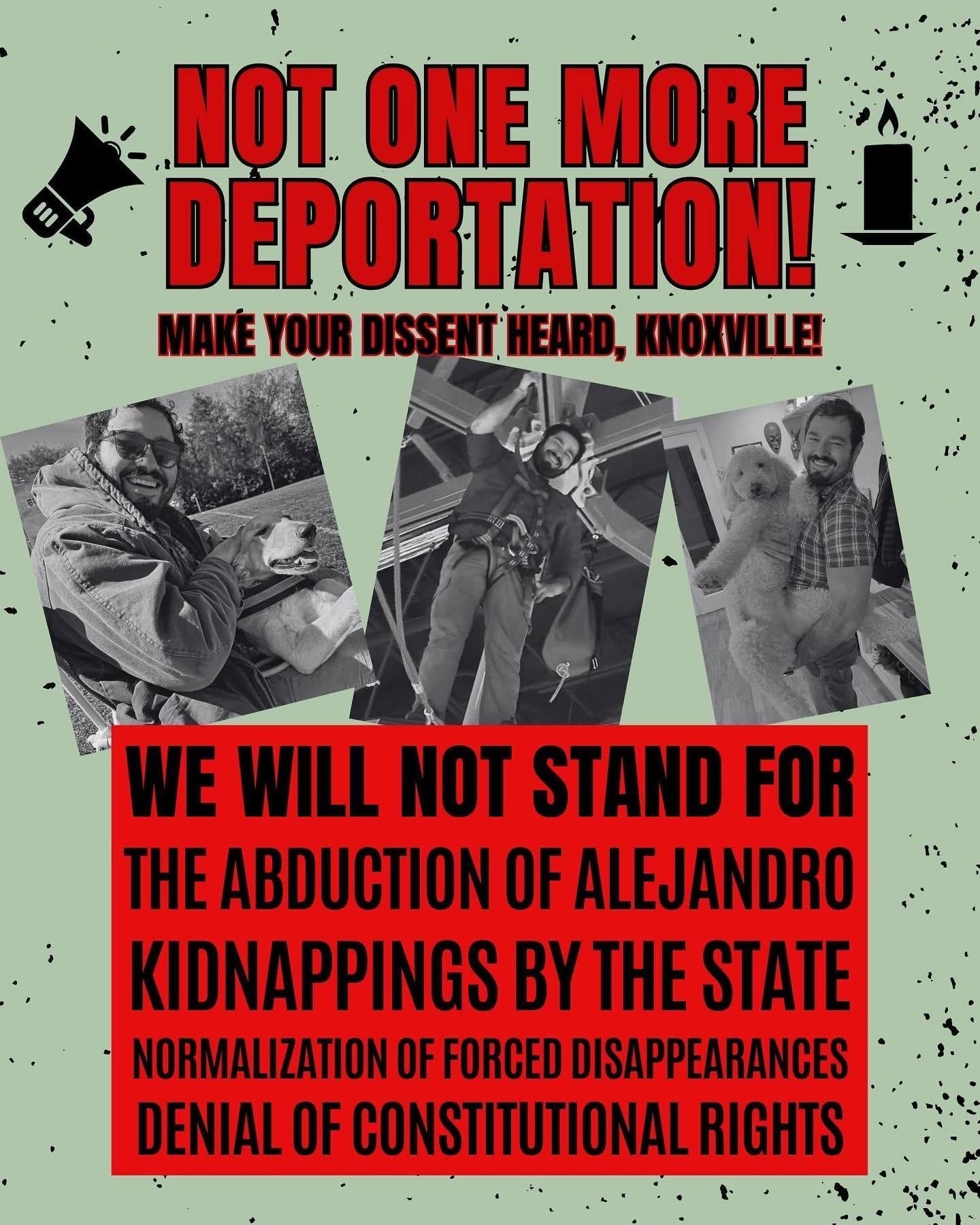
The following is based on an interview with Alejandro, who was detained by Immigration and Customs Enforcement in October 2025 and held at the Central Louisiana ICE Processing Center in Jena, LA, for about five and a half months before being deported to Mexico in April 2026.
The 1,320-bed Jena facility, located in a remote area about 4 hours from New Orleans, is run by the Geo Group, a private prison operator. It’s the facility where former Columbia University student and permanent U.S. resident Mahmoud Khalil was incarcerated for 17 months for his involvement in the pro-Palestinian protest movement.
Alejandro spoke with The New Liberator from Mexico shortly after his deportation in April. The conversation portrays not just the conditions inside one detention center, but Alejandro as a human being of extraordinary courage, grace, and compassion. The stories of hundreds of thousands of other human beings remain untold, of people ripped from their families, often without due process, held in conditions far more horrific than those Alejandro experienced, and without the network of support that helped sustain him. Alejandro told us repeatedly he considers himself “lucky,” knowing that so many others are suffering the “worst.” We are lucky that he has shared his story here to help advance the struggle for freedom and justice.
What Led Up to the Detention
Alejandro came to the United States on a tourist visa in 2003, at age 10; Tennessee was home for 23 years. He started working in immigrant rights at age 18. He ran his own handyman business, which gave him a lot of freedom for work that mattered to him: organizing with the ICE Out of East Tennessee network. For instance, he watched for ICE activity and posted warnings about whether it was safe to drive down the street. “New people I meet ask me what I did for fun in Tennessee. That’s what me and my friends did,” he says.
Alejandro was on probation for a Schedule II substance conviction (Schedule II involves drugs with a high potential for abuse but recognized medical uses). He had arranged his probation so that after paying his court costs, he didn’t need to show up for supervised appointments. “So I thought it was very weird when my probation officer called me in for a check-in. I did text a few people to say where I was going and that I might get picked up. I probably should have texted more people,” he says.
On October 15, he went to the check-in. It turned out that ICE officers had reached out to Smith County and asked them to call him in for a check-in so they could “scoop him.” That’s what ICE did.
From Smith County, he was booked in Nashville, transported to Putnam, then moved to an airport facility in Nashville. He and others were flown to Alexandria, Louisiana, which is a transit point, not a real detention facility. People there wore their street clothes; Alexandria wasn’t set up for stays longer than two days. “It’s literally a place where ‘all right, you’re going to be here until we figure out where to put you or if you’re about to get deported.” From there, he was sent to Jena.
Alejandro had been on ICE’s radar since at least 2011, when he was detained briefly before his case was administratively closed under the Obama administration. “Which is why I was detained for so long, according to them, because it took that long to reopen my case and get me a court case.” Once he got put in front of a judge, he says, “it didn’t take but about a week and a half, two weeks to get me deported.”
Background on Jena
The Jena Detention Center is in the Fifth Circuit (covering Louisiana, Texas, and Mississippi), the federal jurisdiction with the harshest laws in the US around detainees getting out. Alejandro met people sent to Jena from all over the country (North Carolina, New Orleans, Minnesota, Seattle).
“It seemed to me like the administration had just picked Jena as their favorite spot to send people to, even if that wasn’t geographically where they would usually go.” Sending people there as quickly as possible, regardless of where they’re from, so they can’t get out, is part of ICE’s engine for getting people deported no matter what, he says.
Who Was There and Why
Inside, Alejandro met people from Bosnia, Ukraine, Iran, Nepal, Palestine, Jordan, Laos, Brazil, Chile, El Salvador, and Mexico. His best friend was P., from Nepal, who had been in Jena for over a year by the time Alejandro arrived. At the time of this interview, P. had been transferred to a detention center in Texas and, as far as Alejandro knew, was still detained.
His other close friend was A., from Iran, who owned gas stations and had a green card. ICE showed up at his house and took him anyway. A. had a team of lawyers and money to pay them. But A. was stuck in limbo, because the US wasn’t deporting people to Iran given the political situation. The same was true for a man from Palestine, who was super frustrated for the same reason: he had no country to be deported to and no clear path out of detention.
“Some people,” Alejandro says, “were in some type of metaphor, supposed to be deported, but can’t go to the country they’re supposed to go to—stuck in space.”
Alejandro was classified as mid-to-high risk, because he had a prior arrest, so he was placed in the “yellow/red building.” That area mainly houses people who had served significant time, in some cases 10 years, in federal prison before being transferred into immigration detention. They were just waiting out their immigration cases before being deported. Those men were often the most patient people inside. They’d already done real time, so they knew how to wait. The people who’d been picked up off the street with no prior incarceration were more fidgety, more desperate to do something, Alejandro says. “But all you could do is sit there and wait.”
Alejandro noticed that there wasn’t much of the judgment you might expect between those two groups, the people with criminal histories and the people who had just been living their lives when ICE picked them up. “It was a cool mix of people…I never encountered people from the street who were all judgy about people that weren’t from the street,” he says.
Life Inside Jena
Alejandro described the “pods” where people are housed, each one being a big room with about 50 bunk beds in seven rows. There was a guard station immediately inside the entrance, though there wasn’t always a guard there. Sometimes a guard just hung outside of the pod in a chair looking in. Guards would also hang out in a little room in the middle of four pods. There were eight phones along one wall and bolted-down tables and stools. At the far end were bathrooms.
Self-Governance
Jena had guards, some assholes, some nice, Alejandro says, but daily life was mostly organized by the people inside. There was a strong culture of self-maintenance and self-regulation, beside whatever the guards were doing. “We made that work,” he says, “because nobody wants to be there. Nobody was in there as a punishment for a crime; they were just stuck in there waiting for court dates, or on their way to be deported. It could be a really bad time, or you could try to make the best of it.”
When Alejandro arrived, the governance structure in his pod was run by a gang that exists only inside detention. Because nearly everyone in the pod was on their way out, gang rivalries from the outside were largely suspended. But the gang required that anyone running the pod be a member of the gang. Leadership changed every few weeks, and the culture and rules shifted with whoever was in charge.
Toward the end of Alejandro’s time there, though, some of the longer-term residents—Alejandro, P., and others not part of the gang—were allowed to be nominated to run the pod. P., who had been there the longest, became the representative.
Disputes got talked out, to make sure no one was being resentful. If someone was stealing, they were kicked out. If the guards tried to move someone into the pod who the existing residents didn’t like because of the energy they were bringing, they said no, and “the guards respected that.”
What People Did All Day
Alejandro says he spent most of his time in Jena lying in bed reading, especially when he started getting Stephen King books. He could get books fairly easily once people figured out that they had to send him books directly from the seller, not from their personal library. “I was getting so much mail that the mail lady was my friend. She would say, ‘My supervisor told me I don’t have to give you this but I’m gonna let you have it because you’re cool.”
“We were supposed to be able to go outside twice a day, but that was hardly true,” Alejandro says. At times when they couldn’t go outside, a couple of fights broke out. People had way too much energy and were quick to snap at each other. The men did find ways to work out in the pod. “We just had to makeshift our own stuff,” he says, which the guards took away when they saw it. “But we would just make new stuff, because we had nothing but time,” he says.
P. was always trying to calm things down, Alejandro says, even when he wasn’t the pod representative. To discourage fighting, P. would tell people a story about an inmate who got into a physical fight with a guard and they proceeded to pepper spray the whole room. Because the guards are “a bunch of fucking idiots,” Alejandro explained, they trapped themselves in the room—the guards have to call into the radio to get the doors opened—so they were stuck in there choking on pepper spray. But then P. reminded people that if the guards use pepper spray because of a fight, all their possessions will smell like pepper forever, so that’s the last thing they want.
Food, Sanitation, Healthcare
The food, Alejandro says, “was pretty terrible, one level under school cafeteria food.” Because he has diabetes, he couldn’t eat most of the rice, but ate the beans and the protein. Once a week, they got chicken. That was the highlight of everyone’s week.
On chicken day, Alejandro collected the bones. He had access to a microwave, so he would heat the bones in water, let it steep overnight, and the next morning have something resembling broth. “It was great,” he says.
“The sanitation was 90% up to us,” Alejandro says. He heard that other pods didn’t clean every day, but his did. They cleaned every day unless they couldn’t get supplies, or if another pod had stolen their broom handles. The pod got dirty fast. “I’d always see the dust bunnies flying around,” he says. “I just cleaned. How is this happening?”
Seven rows of bunk beds meant a rotating schedule: one row was responsible for cleaning the whole room each day. If you didn’t want to clean, you could pay someone else to do it. “There was always someone willing to do that, because people always want to get extra food you know?” he says.
Healthcare was available, but access to it required persistence. You had to put your name on a list, wait, and then follow up if nothing happened. Advocate for yourself or get skipped. Once you actually got in front of a doctor, they were happy to help you, Alejandro says.
He managed his diabetes better than he expected. Working out and not having easy access to the things like candy kept his A1C in the pre-diabetic range. He also got his eyes checked for glaucoma, something he’s supposed to do every year but hadn’t done in 10 years. He was supposed to get a tooth removed but refused, because he knew they wouldn’t let him keep the tooth. He wants to make a wedding ring out of it.
What Sustained People and Gave Them Hope?
People leaned heavily on religion, Alejandro says. He includes himself in that, but not the type of religion he’d spent his outside life moving away from. He moved forward with his own beliefs, but just internally.
Of course, he got a lot of hope from receiving and writing letters. Phone calls, books, cards, and working out helped too. He was on the phone constantly, and he was writing. There was a PlayStation in the pod, but Alejandro didn’t want to occupy himself with that. He preferred to stay up until five in the morning playing cards with P. and whoever else was awake. “It’s not a life, but you could keep yourself entertained if you wanted to.”
Alejandro says that because of his personality, people would confide in him. “I found a lot of comfort in just recognizing my privilege,” he says. A man from El Salvador, immediately on meeting Alejandro shared that he was $50,000 in debt to the coyote who had crossed him over to the United States. He had just found a job good enough to start paying it back, but then he got picked up. He was facing deportation and a debt he couldn’t pay, and yet what he kept coming back to was that he’d get to go home to El Salvador and see his wife and daughters.
“Wow, if this guy is looking forward to his life back at home, even in debt and all this other stuff,” Alejandro says, “what right do I have to be sad about what I’m doing or where I’m going?” He is happy that he has three times as many family members in his life now, in Mexico, compared to when he was living in the States.
What Can People on the Outside Do to Help?
Alejandro has an immediate answer for this. The most important thing, he says, would be to create a phone number that people inside detention can call—a line staffed by people who speak Spanish, who can receive a name and an A-number (Alien Registration Number) and then connect that person to resources, legal support, or just someone who knows what to do next. He knows of an organization that tried something like this but couldn’t find enough Spanish-speaking volunteers to staff the line.
This matters more than anything else because many people inside have only one or two numbers memorized, and may have forgotten the phone numbers of loved ones. Or they may have family members on the outside who are themselves overwhelmed and don’t know what steps to take. Without a number to call to say I’m here, this is my name, please help me connect to someone, all the other forms of support (letters, books, money on the books, legal fundraising) become unreachable.
“All that letter stuff, book stuff, fundraising stuff comes after that initial connection to the outside world,” he says.
Beyond that, letters are definitely meaningful. Also, money on the books, even a small amount, is meaningful. He mentions that ICE now maintains a website where people can look up detainees; putting money on someone’s books, even $5, through that system is something almost anyone can do.
Alejandro also encountered people who had been cheated by lawyers who took their money and never worked their cases. Access to a verified list of accredited legal representatives who could be trusted was something he wished had existed inside.
What He Wants People to Know
“I got lucky,” Alejandro says. He was detained, and it sucked, but he was not in a detention center with 42 people sleeping on a floor with no beds, he wasn’t given moldy food or sexually assaulted. He knows those places exist. “The nightmare can always be worse,” he says. “And for some people it is the worst.”
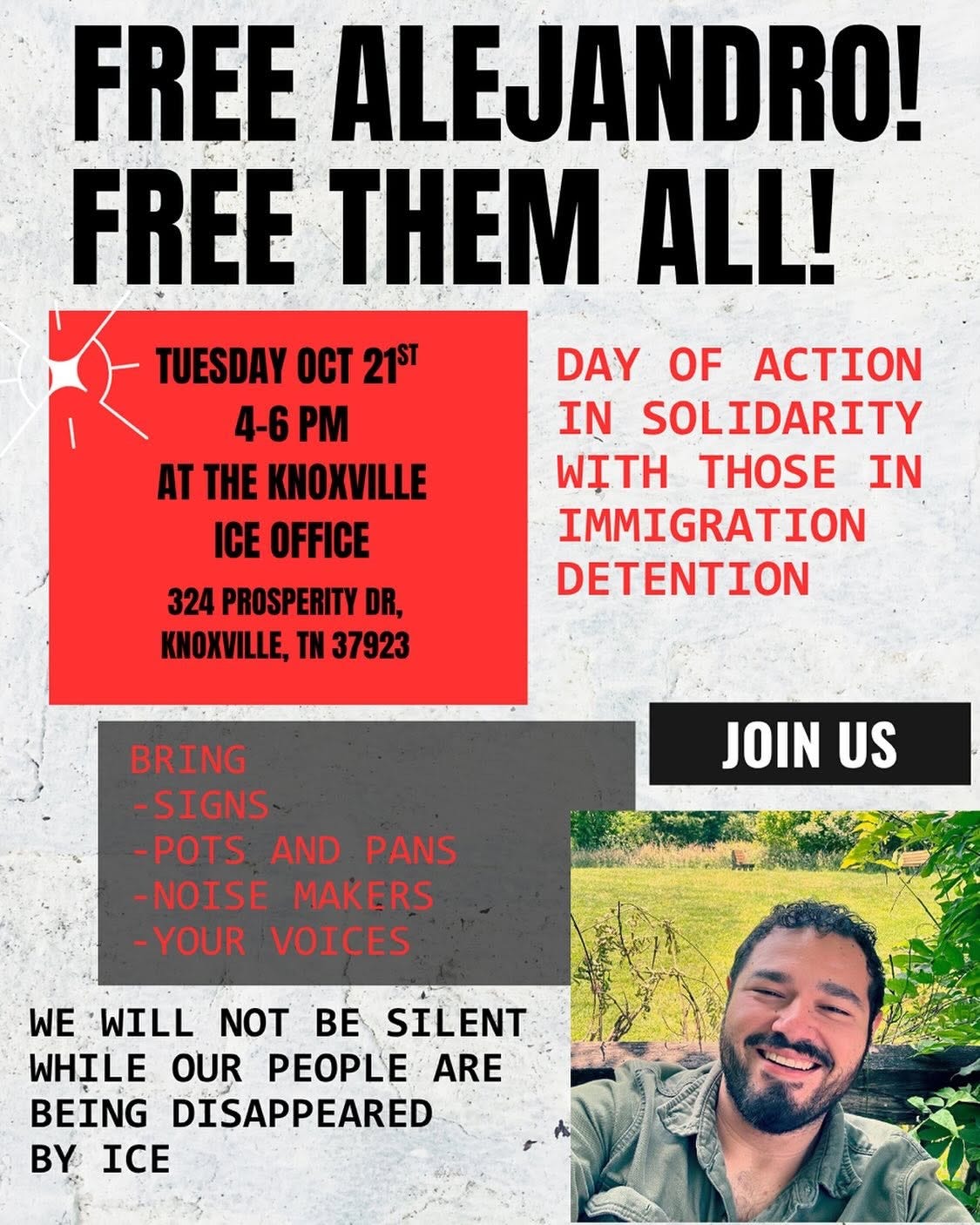
So if you have the chance, he says, reach out or somehow support somebody with a letter, or put $5 on their books. “We can’t all do everything,” Alejandro says, “but we can all do something.”
He describes the chaos of landing in Mexico, where he hadn’t lived for 23 years. He got off the plane in Mexico and received a single sheet of paper saying he had been deported. He was told to return to the state in Mexico where he was born and use the paper to get an ID. The people in that state had never seen the paper. The phone numbers on it rang and rang. “Bureaucracy times a thousand,” he says. The government officials he encountered were doing their jobs and nothing more. There was “zero non-profit help.”
He made it through because one of the friends he had made inside, who was deported at the same time, called an uncle to pick them up. “So I didn’t have to get stuck in the government line for half a day for a free bus pass,” he says. “Not everyone has that.”
Now in Mexico City, Alejandro is building a new life and reconnecting with family members he hadn’t seen in years. He hopes to also reconnect with friends he made inside.
Soon after he was detained, Alejandro asked two things of the people working to support him: to take care of his mother, and to raise awareness through a public campaign. After being deported, he shared the following message with them:
“I want to thank EVERYONE who has had me in their thoughts for the last 25 weeks. It is only through the strength and love of all of you that I am alive and well and actually really excited about this next stage in my life, getting to know a world that had always been out of reach for me. There is so much I have to be worried about, but at least I won’t be looking around every corner for the polimigra as they run rampant through our communities. There is so much uncertainty, but I know I’ll have the opportunity to access higher education, a dream that as an undocumented immigrant living in TN had also seemed so out of reach in the past. These dreams are all within my grasp now due to the fact you all have held me and continue to hold me in the crescendo that I consider my beloved community. I look forward to being able to share a picture of my grateful smile in hopes to brighten your spirits in the way you all have nurtured mine.”