


A founding member of Liberation Road and veteran union organizer describes two decades of socialist leadership of a union local beginning in the 1970s–with urgent lessons for worker and racial justice organizing today.
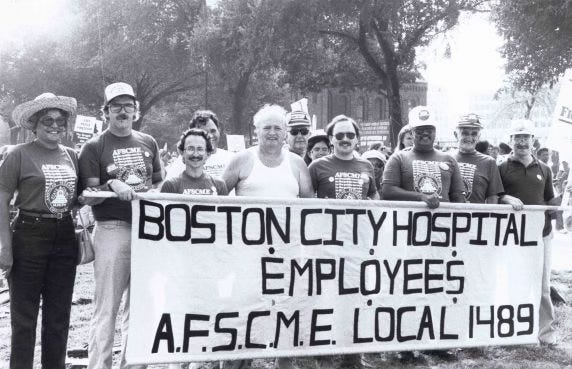
In the early 1970s, a small group of members of a socialist organization went to work in a hospital organized by an AFSCME local in Boston. Central to these organizers’ work was fighting white supremacy. Their experience recounted here is intended to illustrate the difference between organizing based on anti-racist class solidarity and organizing based on traditional bread-and-butter issues only. It is also meant to provide an answer to the question of whether anti-racism can center and strengthen union organizing, or whether it leads to greater divisions among the union workers. Today, as socialists and other organizers grapple with the rise of MAGA, these questions are as important as they were 50 years ago.
US Labor’s Embrace of White Supremacy
As a union activist, the only guidance one needs to push the moral arc toward justice—and it does not bend in that direction automatically—is to always keep this question in the forefront: “What must be done to build the power and unity of the working class as a whole?”
In the US, in a workplace with or without a union, progress toward justice can only be won when the workers recognize that divisions by race, nationality, or ethnicity not only cannot be tolerated, but must consciously and consistently be named, acted upon, and eradicated. It’s not necessary here to rehash the long and shameful history of most US unions’ participation in the exclusion and the oppression of workers of color. Labor failed to follow its own advice: “United we stand, divided we fall.”
Of course there have been and there are progressive union leaders who are class conscious, and have seen the need to include workers of all races and not to favor whites. But treating everyone as if they are the same, acting “color-blind,” leaves racial inequities intact. For example, workers of color have had the lowest paid, dirtiest, most dangerous jobs in every industry. If every worker takes one step forward, since their starting lines are different, the gap between whites and non-whites remains. If a white person makes $2,000 a week and a Chicano makes $1,000, a 5 percent raise for both actually increases the racial wage gap by $50 a week, $2,600 a year. A class-only perspective is not sufficient in a nation built on a foundation of white supremacy. Intentional action is required to erase white advantage.
Marxist Radicals Join the Union Movement (Again!)
Karl Marx observed that history is made by the struggle between classes, and that under capitalism, economic and social crises will grow due to the inner dynamics it contains. Only when the working class overthrows the grip of the parasitic owning class can a just society be born. The Communist Party (CPUSA) and other socialist organizations provided much of the militant leadership that led to the unionization victories of the 1930s and 1940s, but they were purged by union leadership, which then became complicit with the capitalist class, trading a share of post-WWII economic spoils for labor quiescence.
But in the 1960s and 1970s, Marx’s analysis of the capitalist system became relevant once again to a new generation. The Civil Rights and anti-war struggles revealed the racist, violent, and anti-democratic nature of the US government, Marxist study circles cropped up among people of all races in the urban centers, and there was a growing sense that capitalism itself was the issue. In that moment of political ferment, communist and socialist organizations proliferated.
Armed with a class analysis, Marxists from various class backgrounds made the decision to get or stay in working class jobs, either to unionize their workplaces, or to make existing unions more democratic, inclusive, and militant. Revolutionary organizations made strategic decisions about what industries or workplaces were most important to work in, that is, those sectors that could put the biggest “hurt” on capitalism. Members willingly accepted assignments to work where their organization placed them, choosing collective action rather than individual preferences. They entered auto, mining, transportation, and defense industries, as well as joining public sector unions like the postal workers, American Federation of Government Employees (AFGE) (, American Federation of State, Country, and Municipal Employees (AFSCME), and Service Employees International Union (SEIU), with the idea of building a base and then challenging the union bureaucrats.
Some socialist/communist groups saw militancy as an end in itself. But some, including the group discussed below, saw that there could be no class unity without making the fight against racism the union’s first priority.
What Tackling Racism Looks Like
In the public sector hospital discussed here, before the Civil Rights Movement, the hospital staff was all white, and most were hired through political patronage. Even those in low-paid but stable menial jobs such as housekeeping had worked to elect whatever mayor was in office at the time, or were relatives of someone the mayor knew. The membership of the hospital union included skilled workers such as pharmacists, respiratory therapists, and emergency medical technicians (EMTs), but the majority were manual laborers such as housekeepers, food service workers, transport workers, laundry workers, security guards, and nurses’ aides among others. Nurses and clerical staff were in a different union.
During the Civil Rights Movement, African Americans connected the dots between democratic rights (such as voting) and economic rights like associating with other workers in a union. The Civil Rights Act of 1964 ended legal discrimination in hiring, and in 1965, President Lyndon B. Johnson signed an Executive Order, requiring government employers to hire people of all races and ethnicities. That was when non-white workers finally began to be hired at this hospital, and when Black and white workers joined AFSCME in droves. It was the Black struggle that drove the large gains in union membership at that time, demonstrating the importance of the participation of people of color in the labor movement.
By the end of the 1960s, membership in the hospital was one-third white, one-third African American, and one-third Puerto Rican. At the time of the entry of a handful of socialist organizers working as nurses’ aides, food service workers, patient transport worker,s and housekeepers, the existing union leadership was a small closed clique. They had never had to lead a fight, and never intended to. They were more interested in keeping their leadership positions, which offered pitifully few perks in exchange for selling out: time off for union conferences, being protected by management, smoking cigars with the leaders of the other locals in the District Council. It was no wonder that member participation was low. “The union?” A dismissive wave of the hand would be the response.
The opening public salvo to signal that new kids were on the block was an article in the union local’s newsletter criticizing security guards—all male and all white at that time—for harassing housekeepers, who were mostly Black and Puerto Rican. This was a shock! First of all, racist harassment was not supposed to be a union concern; that is, it was not an issue between workers and management. Second, it defended one group of union members against another. Business as usual would have been to sweep those contradictions under the rug.
Did taking on the racism of the security guards bring about “greater power and unity of the class?” No, not in the short run. The guards were predictably offended and angry. But the housekeepers and African American workers took notice. Harassment was a daily trial for them, and so was the fact that their concerns were never taken seriously by either management or the union. The writer of the article was a young white housekeeper from a notoriously racist working class neighborhood who had joined a Marxist group when barely out of high school. In fact, his father was a security guard in the same hospital—but one for whom class solidarity was a natural instinct. Among white workers, there are always those who do not countenance racism; these also became part of the base of support for the new organizers.
The socialists also challenged the all-white EMTs. People in the Black community complained that they came into neighborhoods more like police than like health personnel, swinging flashlights like billy clubs instead of bringing out their stethoscopes. They didn’t treat the families experiencing emergency health crises with respect, as if their Black lives mattered. One solution the new kids put forward was to integrate the EMT department through affirmative action, an idea that met with predictable resistance and outrage. With the help of a fellow progressive doctor who became the head of that department—and who had racist graffiti painted on his locker for his efforts—the EMT staff ultimately became integrated. But the main effect of these efforts was that African American members of the union felt that their communities were being heard at last. Racial oppression was being exposed to the light of day. African American workers became the foundation of support for the agenda of the Marxist rank-and-file organizers; in only a few years, they kicked out the old officers and voted in the radical activists (a multi-racial group) as their new leaders.
It can seem counter-intuitive that to unite the workers, a conscious decision was made to antagonize the white members in the two jobs that had direct, physical power over other people. But where racism exists among the membership, neutrality is tacit agreement with the status quo. Liberation Catholics talk about “the preferential option for the poor,” noting that exercising that option does not exclude others from concern, but that the test of moral justice is how the poorest and vulnerable are faring. Similarly, this group of socialists believed that a “preferential option for people of color” must be exercised; this does not exclude white workers from concern, but the main test of justice is how workers of color are faring.
Various methods were used to keep white workers in the union fold while simultaneously challenging their racism. When issues arose—for example, safety issues for pharmacists who had to transport methadone to another site—the new leaders pulled out all the stops to win the creation of new protocols. One of the most vocal racist guards, who accused the new leadership of cooking the books, was invited for a private look at the books so he could see for himself. While he did not change his racist views, he felt that he was taken seriously, and stopped his vociferous trashing of the new leadership. At least these new folks were honest and open to hearing criticism!
The security force was integrated, and over time, the guards became supportive and active in the union. However, the EMTs did not come around. They disaffiliated with AFSCME, and became part of the police union.
Puerto Ricans also occupied the lower-paid jobs such as housekeeping and food service. Spanish was their first language, and since union meetings were in English, their identification with the union was marginal, and the new leaders who believed that union democracy meant the participation of all were anxious to get their involvement. The new leadership offered to appoint a special union steward to handle the grievances of Spanish speakers. The Puerto Rican workers weren’t interested. Spanish music at the union Christmas party? That was nice, but still no one came to meetings. Finally, they were asked what they needed. Softball is huge in that community, and there was a Puerto Rican softball league. Puerto Rican hospital workers had formed a team, but had no uniforms. Could the union provide them with uniforms? Great idea! There was some discretionary money in the treasury, and other members agreed to spend it on the local’s own Puerto Rican team. The uniforms had the AFSCME logo all over them, advertising the union on the playing field. Non-Puerto Rican union activists went to the games to cheer them on. The responsiveness to a need that had nothing to do with a workplace issue made the difference: Puerto Rican workers became aware that there was a union responsive to them, and they started coming to meetings, and several became stewards and activists. A commitment to inclusion means you don’t blame the marginalized group for its lack of participation. It is the responsibility of leadership to keep trying until everyone feels welcome.
In both the case of responding to Black community complaints about EMT behavior, and the case of the Puerto Rican softball league, another principle besides class solidarity emerged: there is no bright line between workplace and community. Workers have lives beyond the workplace, and union organizers can and must help solve community problems and/or participate in community activities. It is true of every one of us: today, if you’re sick, your problem is health care; tomorrow if your child is bullied, your problem is the school; and the day after, if you get written up at work for something you didn’t do, your problem is the workplace. Building worker power cannot be confined to one issue or one place.
This principle was most keenly illustrated with Haitian workers. Due to the closure of another public hospital where there was a large percentage of Haitian workers at that hospital, many Haitians got relocated to the hospital led by socialists. The usual attitudes cropped up, among all other workers, including African Americans. “The Haitians are clannish and just stick to each other.” “They should speak English.” “They’re talking about us behind our backs.” “They’re foreigners.” The leaders had two problems. First, how could they break into the Haitian group and get them to be union activists? And second, how could they get acceptance for them from the rest of the membership?
Again, the leaders offered a special Haitian steward, and had discussions about union issues like an upcoming contract fight with whatever Haitian worker was around. But even the leaders felt like they were hitting a wall. Maybe it was true that Haitians just wouldn’t or couldn’t relate.
Then in September 1991, a horrific poultry plant fire in which the exit doors had been locked killed 25 people in North Carolina. Progressive unionists around the country rallied against the lack of safety and the higher value the owners placed on chickens than on Black lives. The hospital local organized its members to go to the rally near City Hall. While there, they noticed another rally going on in another corner of the plaza. When they went to investigate, they recognized some of the people as their fellow Haitian workers, and a couple of them were clearly leading the other rally.
Coincidentally, it turned out that in September 1991, the first honestly elected president of Haiti, Jean-Bertrand Aristide—after years of dictatorship and domestic terror—had been deposed in a coup, and Haitians were protesting and demanding his reinstatement. This was a truly critical historical moment for the Haitian people. The local leadership immediately recognized that workplace issues at the hospital paled in significance by comparison. They decided that the best course of action was, “If you can’t organize them, join them!” The AFSCME local asked how it could help, and the answer was to become part of the Haitian community’s communication network to spread the word about the coup, and to pressure the US to help return President Aristide to his rightful position. A lesson learned is that it doesn’t work to go to the group targeted for inclusion by making statements. What works is to go asking questions, and to listen to the answers.
But joining the Haitian struggle did not mean that tensions between Haitians and others disappeared. Iit was one thing for socialists with an understanding of imperialism to ally with Haitians, but it was another to get rank-and-file members to understand and support that struggle. The solution lay in history. The new leaders promoted democracy by opening up the processes for participation. Union meetings were not “business” meetings run with Robert’s Rules, which often are used to shut down dissenting voices; instead, they were places where education was key. The local had one of the Haitian workers, who was also a leader in the pro-Aristide movement, speak. He explained Haiti’s history, that they were the first nation of formerly enslaved people to win their independence, and that they participated not only in the US Civil War to end slavery, but in the Revolutionary War to liberate white people from British colonial rule! When people learn that history, their negative stereotyping turns to surprise and then respect.
But what about the traditional work of unions, the fight for increased wages and benefits and better working conditions? All of the efforts to unify the membership across race, ethnicity, and language were meant to build power of the group as a whole, to win concrete victories.
First, the leadership of the local did away with the idea that it is union staff, the business reps, who solve problems. They started getting members involved in fighting for the local’s own grievances. Rather than emphasizing just the legal arguments or the body of evidence that a person or department’s rights had been violated, the goal was to involve as many other members in support of the grievant. Ground zero of solidarity was to stand up for a fellow worker, to take the risk of visibly and vocally lending testimony on their behalf, in front of managers with the authority to target you for being a union troublemaker. But as it becomes the norm to support others, then the risk becomes smaller to each member over time. The role of the leaders was to model that idea: to take the biggest risks, and to show that they could still keep their jobs.
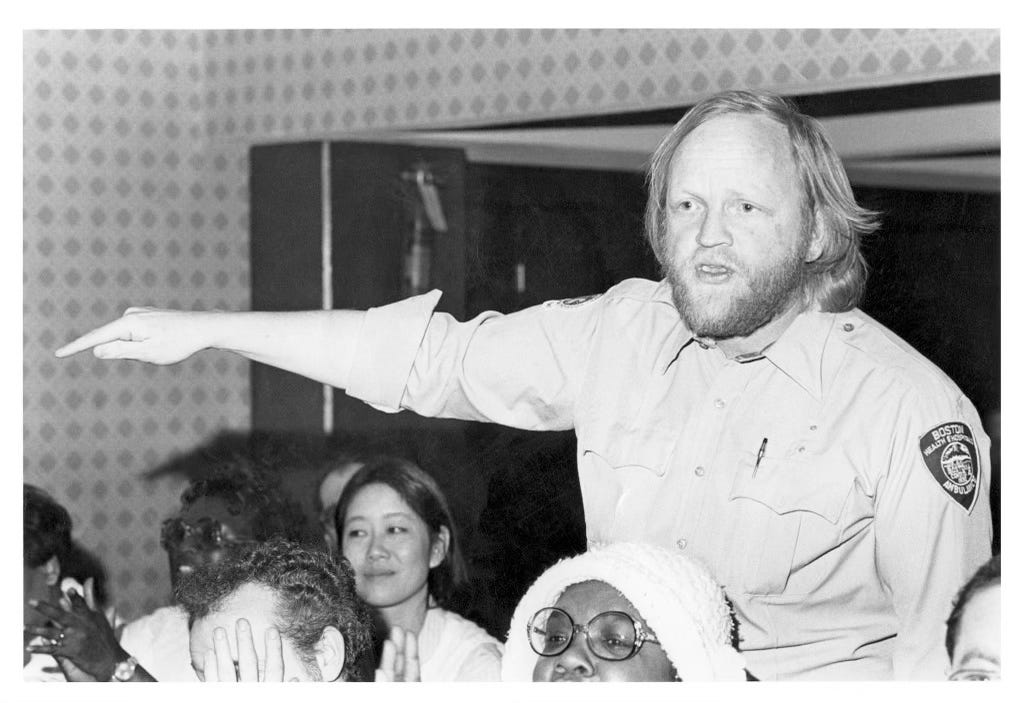
Second, concessions from management are not won by backroom dealing. Negotiations are conducted in full view of the membership, with no information withheld, and with the constant solicitation of the members’ views. The local leaders became known for their willingness to go to bat for all their members, and for being tough and savvy contract negotiators.
Narrowing the Racial Gap
Anti-racism was the hallmark of the local leadership. But the proof is in the pudding. Beyond challenging discriminatory behavior, concrete changes to make the workplace more equitable had to be won.
Immigrant workers were trapped in unskilled jobs in large part due to their lack of command of the English language. A Vietnamese housekeeper had been a professor of French language and literature before becoming a refugee in the US. A Somali trained as an ophthalmologist in Italy, fluent in Arabic and Italian but not English, could only be a pharmacy tech.
The union leadership initiated an English as a Second Language (ESL) class, paid for by the union. They won buy-in from the management so that the session began an hour before the end of the shift and continued for an hour after; therefore, both the management and the workers were invested in the program. An ESL teacher was found who used popular education methodology, in which important questions requiring critical thinking are explored. Based on the ideas of Brazilian adult educator Paolo Freire, the method taps into what people know from experience, and their knowledge is valued and made foundational to the answers to the questions posed. For the Marxists, this mirrored the “mass line” they learned from reading Chairman Mao: you go to the people asking questions about their frustrations and fears, you find out what their skills are and get their ideas on solutions; then those are distilled into a program and a plan of action. That way, people are not taking orders from above. Because they are hearing their own ideas fed back in an organized form, they are willing to take the suggested course of action. Mao called this “from the people, to the people.” The ESL institution started by the union is an example of that method of work.
One would think that the idea of a career ladder for the nurses’ aides, mostly women of color, would be a no-brainer–a way to alleviate the workload of the RNs, to save money for the management, to increase job satisfaction for the aides. Moreover, it was a way to improve patient care. As a public hospital, the vast majority of patients were low-income people of color. The aides came from the same neighborhoods and racial and ethnic backgrounds as the patients; they could speak Spanish to the Puerto Ricans, or sometimes they knew or were related to the patient’s family, or they could chit-chat about life back home in the West Indies. “Comfort” to a patient means in part familiarity, feeling like the caregiver understands you, empathizes with you. Technical skills are just one part of helping people regain their health. However, in proposing a Senior Nurses’ Aide position, the union came up against opposition from the RNs who were afraid of encroachment on their territory. Their arguments were couched in terms of “quality of care,” which had racist overtones. Fortunately, the leadership of the nurses’ union was progressive, and the new job category was created.
But the biggest issue was affirmative action. In the public sector, affirmative action hiring was required, and starting in the late 1960s and early 1970s, the workforce had become more diverse. But in 1978, California passed Proposition 13 which cut taxes and therefore state revenues. The right-wing, anti-tax, small government ideology spread across the country. Reagan took that ideology to the federal level. Cutbacks trickled down. At this hospital, layoffs began, and as was mentioned, one of the public hospitals in the city closed completely. Now there was a dilemma. When there is hiring, affirmative action is palatable to whites since people of all races are getting jobs. But during layoffs , it is a different story. If layoffs were to happen by seniority, since people of color had been hired more recently due to the Civil Rights gains of the previous decade, the workforce could revert back to being mostly white. Would it be fair to people who had been discriminated against in hiring now be the first fired? Would it be fair to a white person who had been on the job longer than a worker of color to lose their job? When it comes down to who loses their livelihood, it gets personal. Many would say that seniority is a sacred union principle. The union leadership had to debunk that, and to win people to the view that class unity trumps seniority. As always, the leadership brought the issue up for discussion at a union meeting. What was fascinating was that the sides did not line up by race. Some white workers felt that consistent fairness required affirmative action in layoffs . Some Black workers were against affirmative action of any kind, since they believed that merit alone should be the criteria for hiring and firing, and they were willing to match their qualifications with anyone’s.
Because layoffs were affecting other public sector jobs, the local leadership initiated the formation of a new organization, Union Members for Jobs and Equality, bringing together union activists of all races committed to protecting affirmative action gains. Members of other AFSCME locals, SEIU locals, the Black firefighters’ organization, and others were involved, and a lot of public education was done in union halls and in the press. The organization put out fact sheets about the supposed sanctity of seniority, noting how veterans and union officers had employment rights not based on seniority.
After months of education and discussion, the matter was brought to a vote in the AFSCME local. The local agreed to creating different seniority lists by race, and then laying off proportional numbers, so that the same proportion of white to Black and other workers of color would remain the same before and after the layoff . That was a proud moment.
However, because this AFSCME local’s contract was part of a city-wide group of locals under a District Council, and because the other locals upheld strict seniority in layoffs, the idea of proportional layoffs got the ax. Across the city, only one union, an SEIU local that was also led by socialists who saw that addressing racial equity was the prerequisite for class unity, succeeded in getting the proportional layoff language in its contract.
Social Justice Issues Are Labor Issues
Unions—as the main defenders of working people in the absence of any political organization that represents them, and given that community-based non-profits often focus on single issues such as youth leadership or access to housing—should see their job as improving workers’ lives in all areas. From pretending to be a lawyer and getting on the phone with a landlord trying to evict a member (and stopping the eviction), to organizing members to rally for gay rights (that was what it was called at the time) and explaining gender justice as a labor issue, to being the labor spokesperson at a massive outcry over the terrorist killing of workers at a clinic that served women seeking abortions, the local’s leadership became known as a progressive voice on a wide range of issues. It was involved in strengthening the leadership of people of color on the City Council, and for campaigning for progressive candidates for local and federal offices.
But before taking controversial stands on social issues, union meetings included discussions and votes, and the leadership was not always successful in convincing the majority to agree with their views. For example, the state proposed cutbacks to the welfare program. Members themselves were one step away from having to be on welfare, so it was thought that they would be strong supporters of the welfare program. But that proved to be false. Many low-income women workers saw a big difference between themselves and their sisters and neighbors, whom they perceived as freeloaders. It’s one thing when you hear that kind of talk from elites, but when people are talking from experience with their own families, there had to be a grain of truth in the argument. Perhaps the incentives and disincentives in the program’s design were wrong—but that wasn’t part of the proposed legislation. The local had to stay silent.
Lessons: The Return of Business as Usual
A radical leader should not consider being president of a union as a lifetime job. After being an officer for some years, it is hard to keep the same level of outrage and passion, grievance after grievance, contract after contract, layoff fight after layoff fight. And while the political challenges as described above are energizing, creative, and satisfying because they make real advances in solidarity, the day to day nuts and bolts of hearing worker complaints and policing the contract is the bulk of the work, and it can get debilitating. As one union President complained, “I thought I would be fighting for the more equal distribution of wealth in society–I feel like I’m spending my life fighting for the fair distribution of overtime!”
There is also the problem of the way the membership perceives the leaders in a culture that loves to have rock stars. In this union, being an officer was not a full-time or even part-time job; officers including the president remained in her/his job classification and did that job every day whether it was transporting patients, dishing up mashed potatoes on the food tray line, or sweeping the floors. But even in this case, the officers came to be seen as the embodiment of the union, and not so much as a fellow human being. The more effective a leader, the more likely the gap. That gap becomes a problem when the leader wants to have honest conversations with their members about their lives and beliefs, to have the camaraderie that comes from being an equal, to be seen as someone who brings out the power in others, rather than being powerful themselves.
Then there is the issue of succession. Bringing forward new leadership is necessary to ensure lasting change, and the socialist leaders tried to do so. But if an elected leader is not part of an independent radical organization, if they do not have comrades who provide the support, discipline, and strategic direction to identify and meet new challenges, if there is no place to discuss new conditions (such as the influx of the Haitian workers), to study possible ways to meet those conditions, and to evaluate the tactics tried, then it is easy to sink back into business as usual. Being part of a socialist organization keeps a person on a steady course, and makes them less likely to fall victim to the pressures of living in a capitalist culture. Understanding that in advance, the Marxist organizers formed study groups with workers they identified as open to radical ideas. The sessions included the nuts and bolts of capitalism, how to use the mass line, how to answer the question “What builds the unity and power of the working class as a whole?” in concrete situations.
Those who took office after the original group of Marxist organizers were progressive, had gone through some of these study sessions, and had worked side by side with them. However, they did not join any independent organization with revolutionary goals, and over time, they did not carry forward the work. Their class consciousness was drowned by the capitalist culture around them, including the culture of the union bureaucracy, that is, the desire to get “perks,” to conciliate with management, or to run the local from the top down to stay in office. This is the water we all swim in; it is all too easy to drown. The local did not remain what it once was: a city-wide progressive force on a range of social and economic issues, a militant and strategic organization ready to support both labor and community struggles for justice and equity.
A key factor in the failure to recruit the indigenous union activists to political organizations was the implosion of the Marxist organizations themselves. Sectarianism, divisions, infighting: rather than unifying into larger projects, these groups were unable to collaborate. Rather than growing, many dissolved. Socialist groups too found out that “divided we fall.” Moreover, the fervor of the 60s had largely evaporated by the 80s, and people were not looking for answers the way they had in the earlier decades.
But that is not to say that the experiment at the hospital, and in other workplaces not described here, was a failure. There were longer-term results that were not expected. Many members, not even just the most active, later said that the way they saw society had changed because of what they experienced: there were the one-on-one political conversations that happened while packing sterile instruments or dishing up jello—educational moments not experienced before or since; the exhilaration of adding your voice to hundreds of other voices at rallies; the rush of adrenaline when confronting power; the laughter at the sarcastic rebuttals to management BS; the pride in seeing one’s own cartoon printed in the union newsletter; the excitement of a standoff with management and seeing management capitulate, the stimulation of hearing diverse opinions and learning history at union meetings. These are experiences of worker power that can give a taste of what is possible.
Another unexpected long-term result was the union consciousness of the Haitian community. Because people talk about what goes on at work with family and neighbors, Haitians who didn’t work at the hospital knew about the union’s support for Haitians on and off the job. Nearly 20 years later, when a different union was attempting to organize Haitian workers in a different workplace, they heard that workers remembered what the hospital union had done, and it translated to a pro-union stance.
Finally, the experience showed that it is possible to make fighting racism the first order of business, and that as theorized, tackling white supremacy full-on was a successful labor organizing strategy. For a historical moment, the small local was a force beyond its membership and beyond the union movement, crossing the line into community and social justice organizing.
Conjoining Worker and Racial Justice
The question of what must be done to build the power and unity of the working class as a whole cannot continue to sit on the back burner. Across the globe, it is socialists who are the clearest about the clash between classes as the driver of change. Some inroads are being made, with Bernie Sanders making “socialist” a proud designation, showing through his policy ideas how the working class can be prioritized. It might be said that his socialism promotes the preferential option for the working class. This is significant. However, he is not the kind of socialist who challenges the capitalist system, nor does he see how addressing racism as the first order of business, necessary to achieve real justice. Until an inclusive vision that understands the preferential option for people of color takes root in the working class, capitalists will continue to be successful at dividing workers through racism.
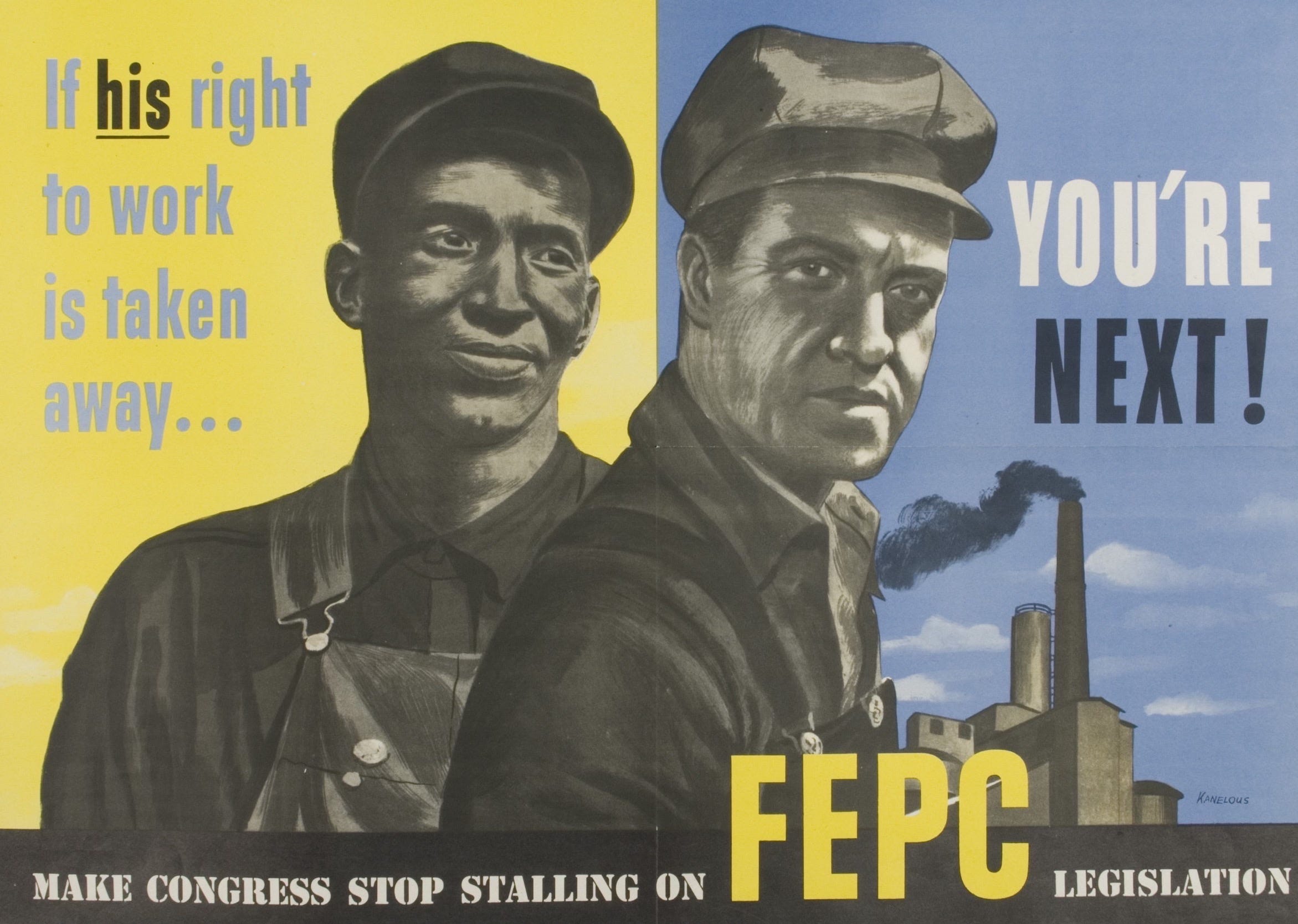
In addition, voluntary political organizations independent of the current two parties, grounded among working people of all races, taking their direction from an engaged membership from the bottom up, must be organized as a corrective antidote to political and union bureaucracies. These are important alternative spaces to build the power of the people and a new culture, a new way of doing business. These don’t need to be started from scratch. There are lessons to be learned both from the organizations of the 1960s that were radical experiments in organizing and from new civil organizations around the globe.
Worker justice is social justice when it tackles white supremacy in society and within unions, and social justice movements are truly about justice when they address the particular impact of their issue on working class people. In the US, “justice” and “rights” have been sliced and diced to the point that the whole is less than the sum of its parts. If the two great movements for power and freedom in the US, the multi-racial labor movement and the multi-class oppressed nationality liberation movements, can be strengthened and conjoined, another US is possible.
A version of this article was published as: Lui, Meizhu (2017) "Fighting Racism as the First Order of Business: Lessons from a Marxist-inspired Union Organizing Experience," Class, Race and Corporate Power: Vol. 5 : Iss. 3 , Article 2. Available at: http://digitalcommons.fiu.edu/classracecorporatepower/vol5/iss3/2
Meizhu Lui has been the president of an AFSCME local and a community health and economic justice organizer, always putting racial justice at the center of her work. She's the co-author of "The Color of Wealth, the Story behind the US Racial Wealth Divide." Liberation Road has been her political home forever.

This is a magnificent piece--spot on analysis and beautifully written to boot. It deserves the widest possible audience.
Is the blond guy in the picture Charlie Rasmussen? I knew him at San Francisco State.
Thank you for providing concrete, first-hand examples of the importance of making anti-racism a core element of working-class organizing. Thank you, too, for the thoughtful summations of errors, pitfalls and successes.