


Tough times. Masked goons kidnapping our people off the street. Big Tech billionaires preening with Christian nationalist hypocrisy – did you know “empathy is a sin”? Corporations, universities, and mega-law firms scrambling, and often collapsing, as they try to cash in on fascism.
The conversation sometimes turns, especially with younger folks, to “self-care”—finding sustainable ways to be strong enough to keep contributing when everything is on the line. Each of us is different and has our own mechanisms, be it binge-watching a favorite show, working out, or trying a digital detox.
But I am here to share the definitive answer to the daunting question: “How do I get through this shit?”
The answer: Celtics self-care.
Growing Up Basketball
I grew up following the Celtics in the 1960s. There were very few National Basketball Association games on television beyond a few playoff games and maybe the All-Star game, so I listened to the games on a little transistor radio that I got for Christmas. The away games against the Lakers ran late, so I tried to stay awake and kept the covers over my head so my folks couldn’t see the transistor’s little red on-light.
Every morning I’d check the newspaper with two questions: Did the Celtics win? And how many players scored in double figures? Six or seven was a good number, meaning the team members did what they did best: run, sharing the ball, not caring about individual statistics, just team play and winning. My early socialist values.
As a kid I played lots of unorganized sports: baseball, football, hockey, basketball. I played soccer every day during the two years I lived on a Pakistani Air Force base where my father was stationed. After returning to the US, I lettered and started in high school soccer, but by then I was already deeply involved in politics, and everything else was in second place.
I could never make the high school basketball team, being both short and slow, but we patched together a church league team, got uniforms, and played. I can definitively state that you can love something that you aren’t any good at.
But the Celtics caught my eye and my heart. My Dad finally took me to a game in the old smoky Boston Garden, maybe 1967, against the New York Knicks. We scrunched into obstructed wooden seats behind announcer Johnny Most, who rasped from the balcony for the radio play by play. Legendary Celtics coach Red Auerbach lit his cigar (the famous “Victory Cigar” that meant the Celtics had already won the game) with a full four minutes remaining. Knicks coach Red Holtzman, another tough Jewish basketball fanatic with Brooklyn immigrant roots, wasn’t having it. The two started jawing and eventually charged each other across the court. There wasn’t the security that they have now, and players and fans got involved. Pretty exciting for me! But my dad had seen enough violence as a navigator in a B-17 during WWII and never took me to another game.
I followed the Celtics through the Larry Bird years, and only strayed from my first love once, when I was living in Milwaukee in the early 1970s. But the Bucks had Kareem Jabaar and Oscar Robinson, two of the all-time greats, so perhaps the dalliance can be forgiven.
Bill Russell: A Boy’s Idol
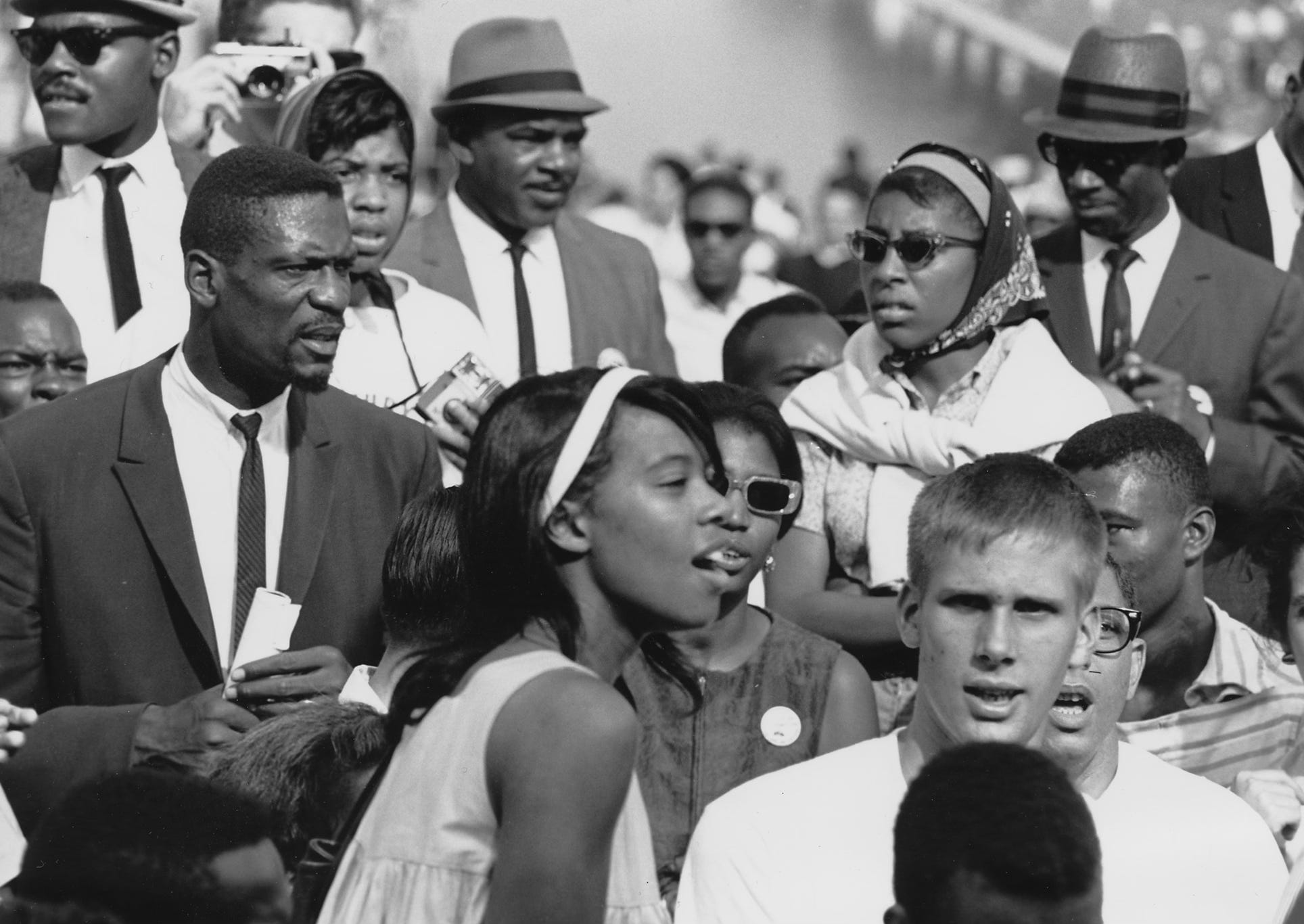
Legendary point guard Bob Cousy had retired by the time I got to the Garden, but Bill Russell, the greatest team player and champion in the history of sports, was still playing with the Celtics. I bought his book Go Up for Glory (1966) when I was 15, and I became a lifelong admirer. Russell was famous for using his fame to speak up against racism in the 1960s, from hosting basketball clinics with Charles Evers in Mississippi after Medgar was murdered, to defending Muhammed Ali’s resistance to the Vietnam draft. He became my hero as I was stuffing envelopes for the Student Nonviolent Coordinating Committee in a church basement in Cambridge, with the Civil Rights and then Black Power movement exploding around me.
In his book, Russell talks about his 1959 State Department trip to Libya, Liberia, and Ethiopia, where he met and shared a car with Haile Selassie. This was just two years after Kwame Nkrumah’s Ghana had become the second independent Black country in Africa (after Ethiopia), unleashing an explosion of African American pride and solidarity. Russell told a crowd of youngsters in a schoolroom in Liberia: “I came to Africa because I believe that somewhere in Africa is my ancestral home. I am here because I am drawn here, like any man, drawn to seek the land of my ancestors.” And “I am a proud, reasonably happy man, who was blessed by God to be born a Negro. I am happy to be a Negro. I am happy to share the problems of being a Negro here in America. I understand that the Irish are proud of Ireland, the Jews are proud of Israel, the Italians are proud of Italy. Just like them, I am proud of my ancestral home—West Africa.’
Union Man
Russell supported the dramatic effort to win a pension for NBA players. Cousy and longtime Celtic superstar Tommy Heinsohn were the first and second presidents of the players association, putting a Celtic stamp on the union from the beginning. The top players refused to take the court to start the 1964 All-Star game unless the athletes started receiving a pension. This was a time when a lot of players had to work second jobs in the off season to make ends meet. Russell was a supporter and activist:
“I don’t know how I got mixed up in all this bit of unionism, but it sounded like the right thing to me, so I participated. Ironically only high-ranking players were involved in the threatened strike—All Stars, men making over $25,000 a year. We were fighting for the little guy who comes into the league and gets $7,500 to start and may never work his way up to more than $14,000 after five good years.”
Russell’s work ethic and compassion for the little guy was rooted in his upbringing. His father famously refused to quit his factory job even when Russell started making the really big money late in his career: $100,001 a year. (He had demanded one dollar more than his rival Wilt Chamberlain was getting.)
“There must be some way to pay a referee a decent wage, say $12,000 a year, and give them more security…I am paid because people pay to see me play. Therefore, I must give them forty-eight minutes’ worth of the best game I have…the fan deserves it. It costs him an average of four dollars for a ticket, four dollars I assume you worked hard to earn.”
Despite his pride and open acknowledgement that he did not trust most white people, he understood the practical need for unity. “The Black man and the poor white man are in the same position economically. They are both a source of cheap labor as long as they are at each other’s throat…as long as you have isolation unionism—a Black union and a white one—they can be played off against each other. The result is deprived people on both sides. They are uneducated.”
Celtics in the Deep North
Boston has had a reputation as a racist city for decades, the “deep north.” No argument there, especially after the racist riots against bussing Black children to white schools in the 1970s. Despite that, the Celtics were pathbreakers. They were the first team to draft a Black player, Chuck Cooper, in 1954. They fielded the first all-Black starting line-up, breaking multiple unwritten quotas: Bill Russell, Sam Jones, K.C. Jones, Satch Sanders, and Willie Nauls, who replaced an injured Heinsohn in 1964. Sam Jones remembers thinking “My gosh, we better win!” They did. Coach Auerbach wanted to win above all else.
And after Auerbach finally retired, Russell became a “player-coach” and won two more championships. Can you imagine a player-coach today? There is a whole second row of coaches behind the bench now. Even the assistants have assistants.
We’re all familiar with casually racist assessments that Black athletes have natural physical ability while white stars have “great basketball (or name the sport) IQ” or a “blue-collar work ethic.” In that context, hiring Russell as the first Black coach in the history of US professional sports might be the biggest breakthrough of all, bigger than the first Black quarterbacks. Of the Black starting five, KC Jones also won titles as head coach in the NBA, Sam coached in the NBA and college, Satch Sanders coached at a local college called Harvard, and Nauls earned a Masters of Theology and worked with his church and youth in his home neighborhood of Watts in Los Angeles.
2025: A New Season, Born Again
This year the Celtics will be led by Jaylen Brown, inheritor of Russell’s outspoken Black pride and intellect. Their best player, Jayson Tatum, is injured and other key players were traded away or signed elsewhere. Brown traveled to his hometown in Georgia to march during the Black Lives Matter uprising. He is a vice-president of the players’ union. He was considered by some to be “too smart” to play basketball when he was drafted—I guess that is some kind of progress. He took advanced degree courses in his only year at Berkeley and always says he is both an athlete and an intellect. He lectured at Harvard and Berkeley on everything from sports to toxic masculinity. He even gave a critical assessment of the sport he loves and that has made him a multi-millionaire: “Sports is a mechanism of control. If people didn’t have sports, they would be a lot more disappointed with their role in society. There would be a lot more anger or stress about the injustice of poverty and hunger. It channels kids into something positive.”
Brown was seen at Vogue after-parties in Paris, so maybe we’ll lose him, but I guess you have to cut some slack to someone young and beautiful and very, very rich. And part of being a fan is of course fantasy, so we’ll take it.
With a lot of new players, hungry to prove themselves, this should be a fun Celtics season. I love to see hustle and great team and individual play. I never bought into the idea that any season that does not end in a championship is a failure. Just run, share the ball, play for the good of the team. And yeah, win.
In fact my favorite play from the 2024 championship year was not Payton Pritchard hitting a mind-blowing last second half court shot, or the thundering dunks of Jaylen Brown.
It was a pass.
It was Game 3 of the Eastern Conference Finals against the Indiana Pacers, fourth quarter, with a minute and 18 minutes left in the game, Celtics trailing. NBA All-Star Jayson Tatum goes to the hoop – just too good to be covered by one person, and three Pacers converged to stop him. Tatum rose to shoot—but instead delivered a no-look, behind-the-back bounce pass to the Dominican old man of the team, Al Horford, in the corner. It arrived chest high, perfect, and Horford was left alone by Tatum’s gravity. Horford, who never took 3-pointers when he came into the league 16 years earlier, worked his way into being a great long-distance shooter. Swish, three points. Momentum Celtics. The Pacers did not score again. Celtics win. Marveling about the pass after the game, Brown said it best: “Hang it in the fucking Louvre!”
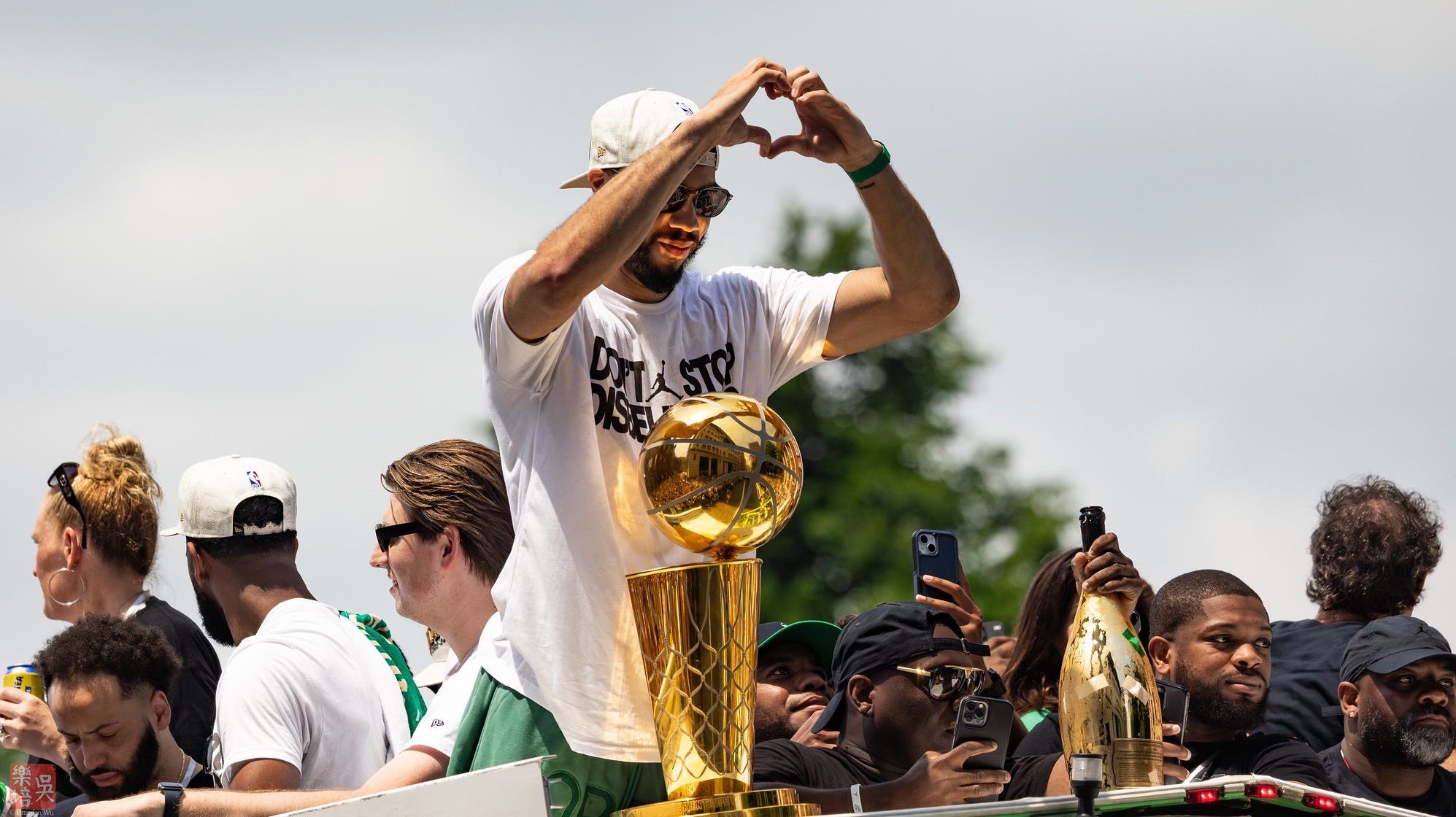
That Brown quote might have been my favorite from the season, save for one other. Guard Jrue Holiday was a dependable scorer and terrific defender, and a class act. He won two Olympic gold medals, was an NBA All-Star twice and an All-NBA Defensive Team selection six times. More to the point here, he won the NBA Sportsmanship Award twice and the Teammate of the Year award three times, and was a finalist for the NBA Social Justice Award three times, for his work in the communities he played in as well as in Africa. Not to mention he is married to a two-time Olympic soccer champion—their kids are probably already drawing scouts.
It was after a game, and Holiday was asked whether he thought Giannis Antetokounmpo, his former teammate in Milwaukee, should have been given the game ball the previous night when he scored 60 points. A rookie from the other team got it, and there was a semi-scrimmage after the game for the ball. This gave the sportswriters something to write about.
Jrue looked confused: “What?” The reporter was taken aback, “You didn’t see the fight over the ball with Giannis?” Jrue shook his head. And the Everyman All-Star replied, “I don’t follow that stuff. I got kids.”
Over the years, the Celtics seem to get players like that, more often than not.
I know that there are poor souls out there who will either consider sports a waste to time, or who are fans of lesser basketball teams, like the Sacramento Kings or the NY Knicks or the Milwaukee Bucks or…actually all of them. I have made a convincing argument here that the Celtics paved the way for racial justice and workers’ rights, yes? I know that the Celtics can’t actually represent all that is good or has ever been good in the world – it just seems that way.
And I know that memory and imagination are close cousins.
But when things really suck, and when you need a break from thinking about your friends kidnapped by ICE or the end of democracy, then you need to have some kind of self-care. So you can get up and fight again the next morning.
Celtics self-care.
And the 2025-2026 season is just getting started.
Jeff Crosby is a labor and community activist and a socialist. He worked as a grinder and elected union official at GE in Lynn, MA for 33 years, and as Executive Director of a community/faith/labor coalition there for 10 years.

As a kid, before the NBA moved west, I rooted for the Celtics, not only because they were good but because it seemed like half the team (Russell included) was from McClymonds High in West Oakland, reaching the NBA by way of USF. Huey Newton was another McClymonds grad. Sadly, the neighborhood is being gentrified with a vengeance— if you’ve seen “Blindspotting,” you may remember scene there with the smarmy white realtor, preparing to close out a deal with the landlord on behalf of her yuppie clients while an elderly black couple is being evicted.
Thought I responded earlier but probably forgot to his "reply', and OG liability. My best memories of Sam Jones was his old-school bank shot, which was deadly, but which you rarely see now except on lay-ups. Sam was the prototype of the 'shooting guard', another position that seems to be on the way to becoming a relic, as today's 'switchable' defensive roles require folks who can defend everything from on-ball to point guards to posting up big men. And 7 footers can dribble and sink 3s. Its an exciting game, requiring tremendous skill and stamina from phenomenal athletes. And probably one reason why dominant athletes of their era, like Sam Jones and even Bill Russel (lightning strike me) might have problems in today's game. But comparing players form different eras doesn't make a lot of sense.