

by C. James, Bill Silver, and Richard Saks


Lists. Not everyone is into lists of this or that: the 50 best films of all time (The Matrix #3); the 10 worst presidents ever (low bar); 100 greatest guitarists (Derek Trucks #16); 100 most beautiful cities (San Francisco #19); and on and on. These lists are totally subjective. As Jerry Garcia responded to complaints about the Dead’s long jams, “Some people like licorice, and some people don’t.”
Many, though not all, sports fans are fans of top ten lists. Below are the authors’ agreements and differences on the US athletes who have most radically impacted their sports and society. We all agreed on the top six, tried without success to keep the list at ten, but couldn’t stop. We hope you will enter the fray with your own choices.
1. Muhammad Ali
Widely regarded as the greatest boxer of all time and beloved around the world, many forget that Ali’s 1967 refusal to be drafted for the Vietnam war was highly unpopular. Mercilessly attacked, Ali was stripped of his heavyweight championship belt and had his passport revoked. He responded: “I’m not going to run away. I’m not going to burn any flags. I’m not going to Canada. I’m staying right here. You want to send me to jail? Fine. I’ve been in jail for 400 years…If I thought the war was going to bring freedom and equality to 22 million of my people, they wouldn’t have to draft me, I’d join tomorrow.” Upon return from his banishment, Ali’s rope-a-dope victory in Zaire over the heavily favored George Foreman was most likely the greatest upset in boxing history.
2. Tommie Smith and John Carlos
On October 16, 1968, two black US track and field athletes, Tommie Smith and John Carlos, stood on the medal award podium at the Mexico City Olympics, heads bowed, wearing black socks, no shoes. As the US national anthem played, each raised a black-gloved fist. No words were spoken, but the moment made history. Smith, who had set a world record in the 200-yard sprint, raised his right fist to represent Black Power. Carlos, wearing a bead necklace to symbolize the lynchings of Black Americans, raised his left fist to represent Black Unity. The Black Power salute, as it came to be known, was a defiant statement against the systemic oppression of Black people in the US and marked a defining moment in the history of civil rights activism.
3. Billie Jean King
Among the greatest tennis players of all time, King lived a life of accomplishments. She brought women’s tennis out of the dark ages and successfully fought to win equality with men’s tennis, who were then earning eight times more than women players. Billie Jean secretly organized 60 women players to form the first women-only tournament and tour and led a threat to boycott the US Open unless the women received equal pay to the men. The threat was wildly successful, and as a result, women players today earn full and equal pay. Billie Jean also became the first major female athlete to come out as gay. Despite losing all her endorsements, she stood by her decision and paved the way for so many other athletes, including Martina Navratilova, to come out as well. Later in her life, King also mentored and advised several of the women’s national soccer team such as Julie Foudy and Megan Rapinoe in their long and largely successful fight for equal pay for women soccer players.
4. Colin Kaepernick
Colin Kaepernick is an American civil rights activist and former NFL football quarterback. In 2016, he gained national attention for kneeling during the national anthem at the start of NFL games to protest police brutality and racial inequality in the US. During one post-game interview, Kaepernick, who kneeled during the national anthem throughout the entire season, explained his position, stating, “I’m not going to stand up to show pride in a flag for a country that oppresses Black people and people of color. To me, this is bigger than football, and it would be selfish on my part to look the other way.” As a result of his action, Kaepernick was excluded by every NFL owner. Yet he powered on and inspired many other pro athletes to raise their voices and actions in protest.
5. Jackie Robinson
Jackie Robinson was the first African American in Major League Baseball in the modern era. Robinson’s major league debut, made at great personal cost and sacrifice, brought an end to 60 years of segregation in professional baseball, known as the baseball color line. Martin Luther King Jr. once said that Robinson was “a legend and a symbol in his own time, and he challenged the dark skies of intolerance and frustration.” Robinson won personal honors as the most valuable player and led the Dodgers to multiple world championships. Not surprisingly, during the rising anti-communist crusade in 1949, the ruling class sought to use Robinson to their own ends, pushing him to testify against Paul Robeson, a communist sympathizer, a star athlete, and a great singer/actor who was subsequently barred from performing. Robinson came to terribly regret his testimony. For more on this, check out this book review.
6. Jack Johnson
The son of former slaves, Jack Johnson became the country’s first Black heavyweight boxing champion in 1908. Throughout his life, Johnson defied and thumbed his nose at white supremacist society which could not accept a Black champion, never mind a Black man who flaunted his success and publicly dated white women. Desperate to “take back the title for white America,” the ruling class recruited white boxer Jim Jeffries to take on Johnson in what became the “Fight of the Century.” Jeffries aimed “to prove that a white man is better than a Negro.” Even Jack London, a rugged individualist writing at the time who later became a socialist, stated that “the White Man must be rescued.” The “rescue” never happened and Johnson won in the 15th round. Soon after, authorities arrested for Johnson for violating the Mann Act, a law meant to stop sex trafficking but widely used to prosecute those who had interracial relations. After being convicted by an all-white jury, Johnson defied Jim Crow laws and fled to Europe and Mexico.


7. Bill Russell
“On the court, he was the greatest champion in basketball history,” President Obama once said. “Off of it, he was a civil rights trailblazer.” Russell led the Boston Celtics to an amazing 11 NBA championships in 13 years, always giving the team what it needed most—defense, shot blocking, and rebounding. “[Yet] none of my medals or championships could shield my children from white supremacy,” said Russell. Russell marched with Dr. Martin Luther King Jr., stood by Muhammad Ali over Ali’s refusal to enter the draft, and helped to initiate the first official boycott of an NBA game to protest racism. Russell stood up to vulgar racism in Boston where his home was vandalized and white neighbors petitioned to keep him from moving in. After doing a series of integrated clinics for the brother of the recently assassinated civil rights activist Medgar Evers, Russell received multiple death threats. Russell responded, “I wasn’t scared of the kind of men who come in the dark of night. The fact is, I’ve never found fear to be useful.” As the first Black coach in the National Basketball Association, Russell won two more championships as a player-coach for the Celtics.
8. Dr. Bernice Sandler
We’ll make an exception here on our required bona fides. Sandler was not an athlete but an activist and researcher who used existing civil rights law to encourage many hundreds of complaints against universities for sex discrimination in education. This led to Title IX of the Education Amendments of 1972, a landmark federal civil rights law in the US that prohibited sex-based discrimination in any school or any other education program that received funding from the federal government. This had a transformative effect on girls’ and women’s sports. Although Title IX has been criticized for being “toothless” in adequately addressing sexual harassment in sports, its introduction changed the entire landscape of high school and college sports, notwithstanding recent court rulings intent on rolling back much of the amendment.
9. Jesse Owens
Adolf Hitler and Nazi Germany hosted the 1936 Olympic Games in Berlin in an attempt to prove Nazi propaganda about White Aryan supremacy. Jesse Owens was a Black track and field athlete who made history at those games by winning four gold medals, setting Olympic records in each event. He was credited by numerous sports outlets and news organizations with “single-handedly crushing Hitler’s myth of Aryan supremacy.” Owens’s career broke many racial barriers that no man before him had accomplished. However, to no surprise among Black Americans, Owens came back to a Jim Crow America that was still racist to the core. Unlike his white teammates, Owens was uninvited to the White House to meet President Roosevelt. Nor was Owens given any endorsement opportunities. Owens spent the rest of his life working as a gas station attendant and playground janitor, and being exploited as a man racing against horses.
10. Wilma Rudolph
Wilma Rudolph (1940–1994) was a Black American sprinter who overcame polio to become the first US woman to win three gold medals in a single Olympic Games (Rome 1960). As a vocal figure of the Civil Rights era, she famously refused to attend her 1960 homecoming parade in Clarksville, Tennessee, unless it was integrated, marking it as the city’s first desegregated event. Throughout her life, Rudolph continued to use her international fame to challenge social inequities in the segregated South, paving the way for many Black women athletes.
Rest of the Best?
Oscar Robertson
Before Lebron James and before Michael Jordan, and even during the era of the NBA’s great behemoths of Wilt Chamberlain and Bill Russell, there was one player considered the GOAT: Oscar Robertson. The Big O averaged a triple double over his first five professional seasons. In addition to being an outspoken critic of racism in sports, the Big O’s most important legacy was his role as president of the NBA Players Association, where he fought for player pensions and to win free agency. During the 1964 NBA All-Star game, players refused to leave the locker room until they received a guarantee that the league would create players pensions. The Big O remains one of the great towering figures in sports for justice, fairness, and strong unions.
1966 Texas Western NCAA Champions
Texas Western’s 1966 men’s basketball team demolished numerous racial barriers in society and sport when its all-Black starting five was the first to win the NCAA’s national championship. Beating the all-white blueblood University of Kentucky, and its establishment Jim Crow standard bearer coach, Adolph Rupp, Texas Western stunned the basketball world and paved the way for the integration of intercollegiate sports and the recruitment of black players to all major college sports programs. Prior to Texas Western’s historic upset, many college athletic programs fielded all-white teams and only recruited white players. Texas Western changed its name to UTEP (University of Texas – El Paso) but their 1966 victory still stands as one of the great watersheds for racial justice in American society.
Curt Flood
Curt Flood was a great center fielder during the 1950s and 1960s, a three-time all-star, and vital cog for the St. Louis Cardinal championship teams of the 1960s. But Flood’s legacy as an athlete came when he refused to accept his trade from the Cardinals to the Philadelphia Phillies, claiming “I do not feel that I am a piece of property to be bought and sold irrespective of my wishes. I believe that any system which produces that result violates my basic rights as a citizen and is inconsistent with the laws of the United States and of the several states.” Though Flood was exiled from baseball, he opened the door to players winning the right to be free agents, a victory since spread to most major (and now college) sports.
Earvin “Magic” Johnson
One of the greatest point guards in NBA history, Magic was drafted by the Lakers in the 1980s at a time when the NBA was on life support and accused of becoming “too Black.” Through his great playmaking abilities, his huge personality, and his competitive rivalry with Celtics great Larry Bird (derogatorily referred to as the “great white hope”), Magic turned the Lakers into “Showtime” and helped forge a revival of the NBA before Michael Jordan arrived. At the height of his career, Magic disclosed that he had HIV at a time AIDS was considered a death sentence that only affected gay men and drug addicts. Though forced to retire, Magic became a leading voice in the fight against HIV/AIDS, helping to educate the public—especially the Black community—about the disease and the need for safe sex. Magic came back to play in one all-star game that season. He received a standing ovation from the fans and hugs at center court from his fellow all-stars. Today, Magic is alive, and due to progress in the fight against AIDS, free of the HIV disease.
Roberto Clemente
A great hitter and an even better outfielder, Roberto Clemente was born in Puerto Rico in 1934. He led his Pittsburgh Pirates team to two World Series titles and was the most valuable player in the National Leage in 1966. Clemente had a throwing arm like a cannon. He played at a time when less than 9% of ball players were of Latino heritage—a figure now close to 30%. He refused to be disrespected (“Don’t call me Bob”) and openly confronted racism against Black and Latino ball players by demanding equal access to restaurants and hotels. Clemente led a successful fight to postpone baseball’s season opener due to the assassination of Martin Luther King and constantly paid tribute to Jackie Robinson. Tragically, Clemente died five months after his retirement when his plane crashed while he was shepherding food to help the people of Nicaragua after a massive earthquake.
Kareem Abdul-Jabbar
Kareem Abdul-Jabbar was one of the greatest basketball centers of all time, famous for his ‘sky hook” that made him close to unstoppable as a scorer. Like Bill Russell, Kareem did not bow to expectations of white society. He changed his name from Lew Alcindor to KAJ in 1971, declaring that he was originally named after a French man who brought slaves to America. While in college at UCLA, the rules were changed to eliminate dunks in order to limit his success. He protested the Vietnam war and wrote that “disagreeing with those in power is never met with beneficent approval and hearty handshakes but rather with blood, batons, and bullets.” “Yet if we all stayed quietly at home,” Kareem wrote, “there would be no Boston Tea Party, no United States…and we’d still have slavery and segregation. “
Paul Robeson
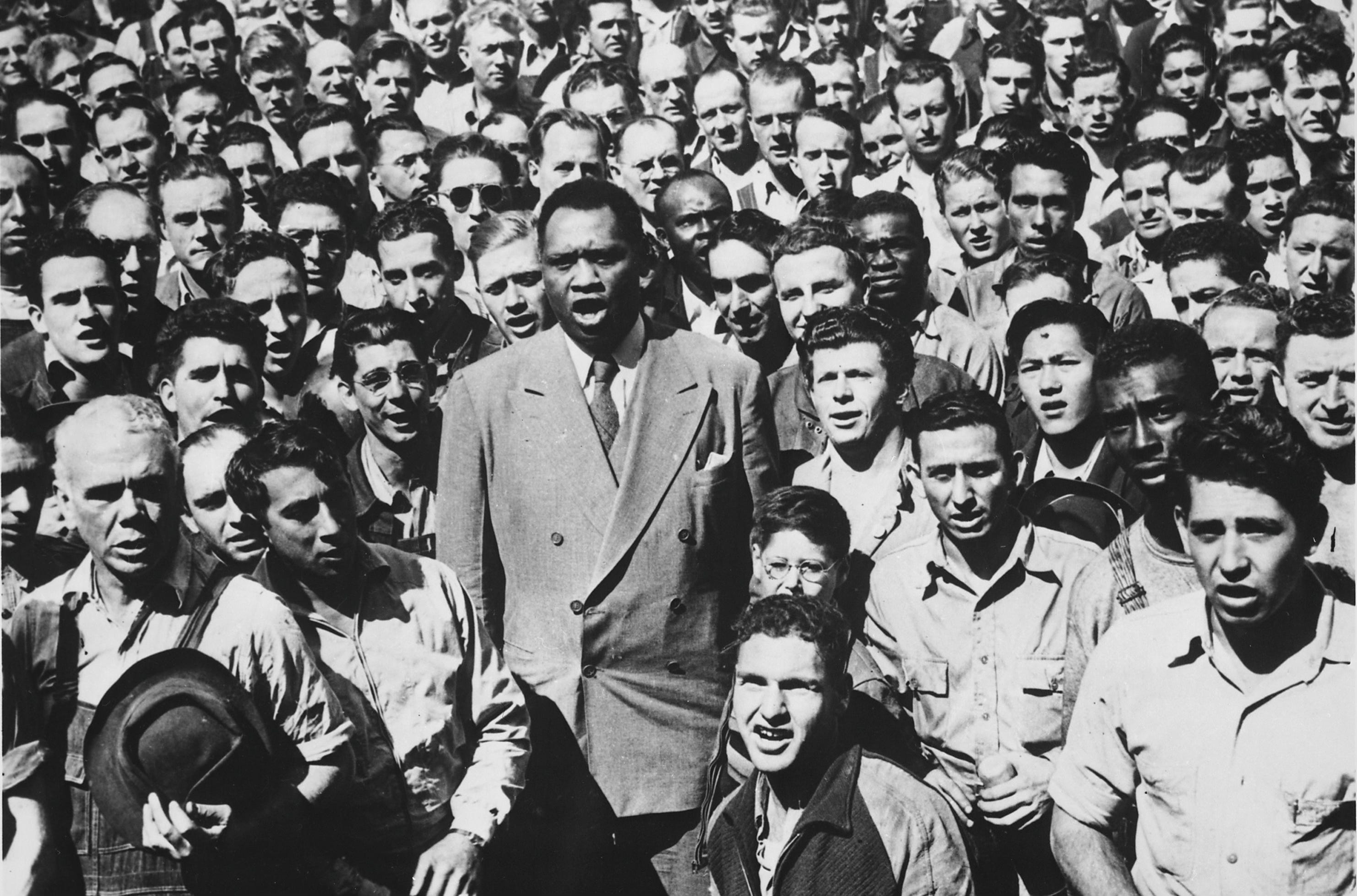
Robeson makes the list as one of the greatest athletes of his time who went on to become the greatest individual American force for change during the first half of the 20th century. In 1915 becoming only the third African-American to ever enroll at Rutgers University, and despite encountering pervasive racism at every turn, Robeson went on to become, in the words of legendary football coach Walter Camp, the “greatest end to ever play that position.” He sang and spoke out about the twin evils of racism at home and fascism abroad and supported the anti-Franco forces in Spain. In 1943, he launched his Broadway production of Othello to a 20-minute standing ovation. In 1950, the US State Department revoked Robeson’s passport, calling him “the most dangerous man in America.” When called before HUAC for his activism, Robeson refused to leave the country, name names, or apologize for his political activities including his sympathies for communists and the Soviet Union. Ultimately, he was perhaps the greatest American voice for freedom and equality during the 1930s and 1940s.
Final Overtime
Yes, there were no votes Caitlin Clark (transformative, maybe, but apolitical), Babe Zaharias (too obscure), or Renee Richards (predated trans politics and had little social aftereffect). Those who did receive some votes but didn’t make our list included Joe Louis, Jim Brown, Serena Williams, Jim Thorpe, Martina Navratilova, Bill Walton, Babe Didrickson, and Mahmoud Rauf.
We hope you enjoyed the list and we welcome you to do better.
C. James was a Division 1 basketball player in early 70s till his involvement in the new communist movement. He recently retired from teaching at the University of Illinois.
Bill Silver is a community activist who recently retired after 40 years as a union member and staff organizer. Bill traces his early socialist beginnings to a high school walkout following the killings at Kent and Jackson State. He is an avid athlete and sports fan who has currently found a new home on the pickleball courts.
Richard Saks is a 1976 Rutgers-Livingston College alum, who upon Paul Robeson’s death in 1976, helped spearhead a valiant struggle by students and faculty to rename the school as Robeson College.
Lets hear it for Wilma and Billie Jean. But how could you forget Althea Gibson. Professional in two sports: WTA and LPGA and had to dress in her car
There's a fascinating new book by Howard Bryant called "Kings and Pawns" which examines the history of Jackie Robinson and Paul Robeson centering on their appearances before the House Un-American Activities Committee (HUAC) and their respective roles in the fight for civil rights, integration, and protests. The author closes by taking us to a Ted Koppel interview 40 years later with one of Robinson's teammates, Al Campanis, who uttered the infamous line when questioned about the lack of Black leadership in baseball that [Blacks] "may not have some of the necessities to be a field manager or a general manager."