


Liberation Road was honored to co-host a trilateral panel at the recent Socialism Conference with two other socialist groups: North Star Socialist Organization and DSA’s Socialist Majority Caucus. Our focus was on discussing a shared strategy for how socialists can contribute to the fight against MAGA inside a broad front, while building the independent power and initiative of the Left.
Now, we’re excited to offer a live webinar version of that discussion, hosted by Convergence Magazine. I hope you can join us this coming Wednesday, October 16th at 8:00 PM Eastern (5:00 PM Pacific) for “Marx Over MAGA: The Socialist Left in the Fight Against Fascism.” Click here to register now.
We’ll talk about how today’s MAGA movement dangerously differs from but draws on 20th century conservatism; how we can both cooperate with centrist Democrats against a common enemy and contest with them for leadership in that fight; and how these struggles play out differently in red, blue, and purple states and contexts.
As a teaser for that conversation, below is an edited and expanded transcript of a portion of my remarks from the panel at the Socialism Conference, on three key concepts for a socialist strategy against MAGA.
In solidarity,
Bennett
Three Key Concepts for Socialist Strategy
Liberation Road strives to learn from all revolutionary thinkers, struggles, and lineages while worshiping none. Many of our founding members came out of radical movements—like SDS, the Black Panthers, and the Brown Berets—who were deeply influenced by the Chinese and Vietnamese revolutions, and by some advances that Maoism then seemed to offer over both the “orthodox” Marxism of the USSR and over Trotskyism. Over time, many grew disillusioned with aspects of Maoism, and doubtless some of the lessons US leftists drew from it were the wrong ones. We should evaluate all of these histories and legacies critically. Nevertheless, there are a couple of core concepts from that lineage that can help us formulate a socialist strategy today.
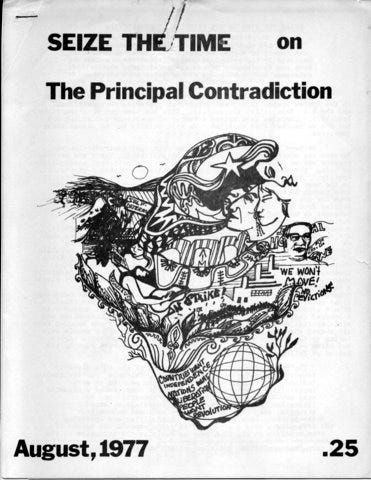
One of these concepts is Mao’s notion of the “principal contradiction.” The others are “united front” and “mass line.”
Principal Contradiction
As socialists, we understand that, fundamentally, the core contradiction of our society is capitalism—the contradiction between labor and capital, or between social production and private property. But while that contradiction is fundamental, social struggles rarely if ever appear in the “pure” form of anticapitalist struggle. That’s because that core contradiction both generates and participates in a much broader web of contradictions that exist in relation to each other.
One of Mao’s key strategic and theoretical insights was that in any political moment (based on time, place, and conditions) one of those many other contradictions is going to be the main one—the primary struggle, or the “principal contradiction," for that particular period. Meaning it is the one that has to be addressed in order to advance to the next stage of struggle.
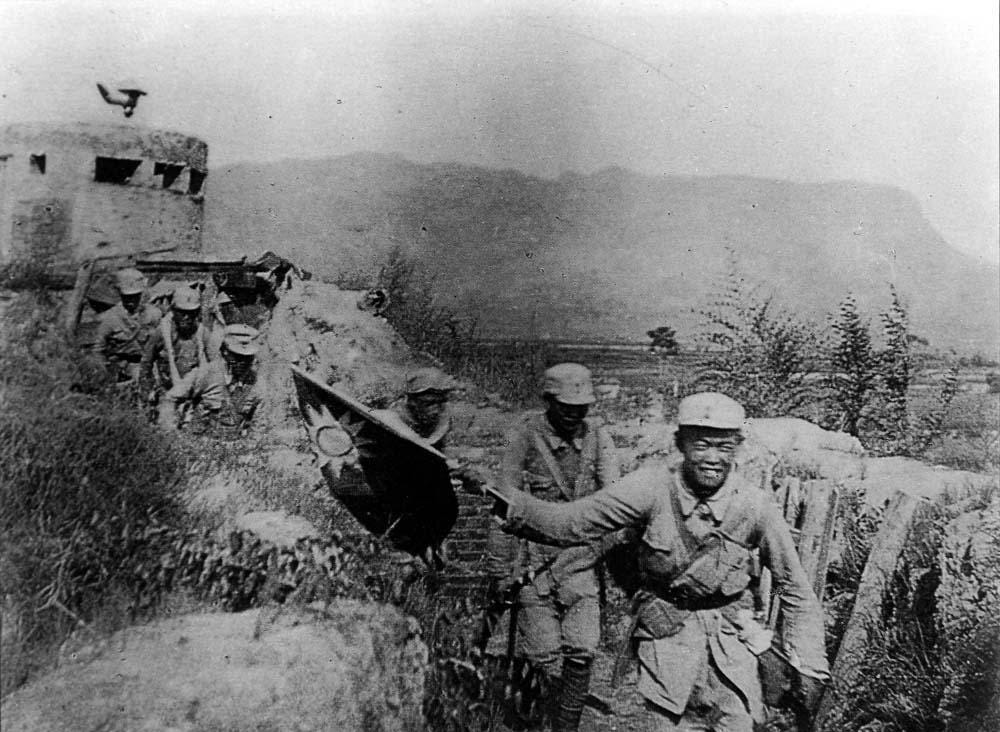
Mao came to that realization in the context of the Japanese imperialist invasion of China. Before the invasion, the Chinese communists and the Kuomintang had been fighting a civil war. But then in 1937, the Japanese invaded China, and suddenly these opposing forces found themselves forced to form a temporary and tactical alliance against a common enemy— because if they were to continue fighting each-other, they would all be wiped out. And so in that moment, the principal contradiction changed. Previously, it had been the struggle of proletarian and peasant forces versus bourgeois nationalists. Now, however, the key struggle was between all those forces, collectively, and the imperialist invaders. Of course, the moment that they successfully resolved that contradiction, and repelled the Japanese, they faced a different set of contradictions.

I say all that because in this particular political moment in US history, Liberation Road believes that the principal contradiction in the United States is between this neofascist MAGA movement and everyone we can bring together to unite to defeat them—a broad, multiracial, pro-democracy United Front.
That doesn’t mean that other contradictions we have, including with the centrist Democratic establishment, cease to exist. They are very real! And if we are successful in our shared battle to defeat MAGA—not just in November, but so decisively that it no longer poses an existential threat to our democracy—then those tensions will likely break out into even more open struggles. But in this moment we need to understand that, even as we continue to struggle with and against the centrist establishment, we nevertheless have to work with them against a common enemy.
That’s why we’ve said our threefold task is to simultaneously block the right, broaden the front, and build the left. Of course, that’s a tricky dance to do. To help us, there are two other important concepts we can take from Maoism: mass line and united front.
United Front
The term “united front” can be confusing, because different left lineages use the phrase to mean different things. One tradition uses it to mean an independent coalition of working-class forces. This tradition draws on Leon Trotsky’s analysis of early 1930s Germany. At that time, the aptly named Centre Party led a coalition government including the center-left Social Democrats and several smaller parties, headed by the centrist Chancellor Heinrich Brüning. This centrist and center-left government was a minority government, opposed to its left by the German Communist Party and to its right by the Nazi Party, which was then in its ascendency.
Surveying this political landscape, Trotsky argued that the German Communists should form an alliance with the center-left Social Democrats, but reject any collaboration with the Center Party and refuse to vote with or for its leader, Brüning. Indeed, he argued: “We Marxists regard Brüning and Hitler [...] as component parts of one and the same system. The question as to which one of them is the “lesser evil” has no sense.” He believed a united front of Communists and Socialists could successfully fight a two-pronged battle against both bourgeois parliamentary democracy and the rising forces of fascism simultaneously.
Of course, as we know now, Trotsky was wrong. Trying to fight Brüning and Hitler at the same time divided antifascist forces and facilitated the Nazi’s rise to power. In hindsight, we could say that Trotsky failed to understand that the principal contradiction at that time in Germany was between the Nazis and everyone who stood against them. Today, some socialists in the US make the same mistake when they argue we must “break” with the Democratic Party and fight both the Democrats and the MAGA Republicans simultaneously.
Around that same time period, however, Mao used the concept of “united front” very differently. For him, the term was a strategic framework for successfully addressing the principal contradiction. If your main enemy is the fascists (the Japanese in his case, rather than the Germans) then your goal should be to build as wide an alliance as possible to defeat them. If you successfully do that, of course, you’ll be on a different terrain, with new and different struggles. But he understood that if you try to fight multiple different struggles at the same time, you would lose. So for him, “united front” was a strategic framework for assembling as broad a coalition as possible against your main enemy. That’s not just sound military strategy, it applies to politics too.
So in this moment, if we’ve identified the MAGA movement as the principal danger to our social movements and to our people, then what that means is we need to build the broadest possible alliance to defeat them—a united front of everyone who agrees that Trumpism poses a real and dire threat, and one that needs to be defeated. And the good news is, there is a very broad array of people, factions, and forces in this country who understand that—everyone from Noam Chomsky to Liz Cheney! That’s a very broad front.
Mass Line
The challenge, of course, is that a front containing everyone from Noam Chomsky to Liz Cheney is going to contain a really wide array of perspectives and ideas. So how can leftists work within that broad front—help hold it together and give it some coherence—while advancing our perspectives and ideas?
That’s where the third concept we can take from Maoism comes in useful: mass line. Mao understood that, if we need to build the broadest possible front in order to win, there are going to be a lot of secondary contradictions within it—a lot of conflicting ideas about the sources of our problems, and the solutions, and the best tactics and strategy. Some people, a very few, might have really correct ideas about everything; Mao called them “the advanced.” Some people have really awful ideas; he called them “backwards” (a term that can sound odd in English translation, but that basically just means reactionary). And the vast majority of people would hold a mix of confused and contradictory ideas between the two.
So for Mao, “mass line” was a practice of listening deeply to the various ideas of all the people and forces within the front, gathering up the best of them, sorting out the bad ones, and then condensing them into a political program that would resonate—a “mass line.” (Because even dedicated socialists don’t start out with all the right ideas, by the way; we develop them by engaging with our people, within the front.) And the best “line” would be one that met the masses of people where they’re at—resonated with their needs and their experiences—but also helped to shift the needle, by moving the majority closer to progressive positions and isolating the more reactionary forces.

And basically, that’s a practice we’re all familiar with from our organizing, right? We do it all the time on issue campaigns, in community organizing, in labor unions. It’s easier said than done, of course. But it’s that same approach we need to take, at a larger scale, when we talk about working within the broad front of people we can bring together in this fight against MAGA.
There’s a kind of conceptual sloppiness that often creeps in when socialists debate how we should relate to “the Democrats.” Because what do we mean by that? The DNC? The various local, state, and national party delegates? All the different Democratic politicians? The people who work for their campaigns, or volunteer for them, or donate to them? Everyone who’s registered Democrat? Who’s ever voted Democrat? (Which includes most of us in this room, by the way.)
The moment that we start to tease that out, it becomes clear that we’re not talking about some monolithic entity. What we’re talking about is a whole bunch of different people. Some of them have really well-developed, progressive ideas. Some of them have really awful, reactionary politics. And the vast majority of them are in the middle—not in the sense that they hold precisely calibrated centrist positions on every issue, but that they’re with us on some issues and against us on others, and sometimes both simultaneously, and sometimes they haven’t even thought about them at all. They’re all over the map.
So when we talk about mass line, it means within the broad united front arrayed against MAGA, we need to identify the forces and individuals who are aligned with us and work to build with and strengthen these advanced forces, so that we can win more people to our positions and gradually assume greater leadership over the entire front. Because it’s absolutely true that the forces currently leading our pro-democracy united front have horrific positions on many issues. (Even as we should recognize the places where we have been able to really move the needle and win the war of ideas within our front—for instance, on LGBTQ+ equality.) But the way that we do that isn’t by sitting out the main struggle and the principle political contradiction of this period. It’s by engaging in that struggle within the broadest possible united front, while simultaneously working to expand our power, organization, and leadership within it.
There’s a lot more to discuss about a socialist electoral strategy. If you are interested, I encourage you to check the Road’s position paper on the 2024 elections, as well as our Main Political Report and Strategic Orientation for this broader political period. But I hope that for now it’s been helpful to explore these concepts of the principal contradiction, mass line, and united front. For many of us in Liberation Road, they are frameworks we have found useful as we work to develop and implement a left electoral strategy.
We hope you can join us for more conversation! Please join us at “Marx over MAGA: the Socialist Left in the Fight Against Fascism.” Wednesday October 16th @ 8:00 PM Eastern (5:00 PM Pacific).

Bennett Carpenter (they/them) is a queer Southern organizer, trainer and movement strategist. A member of the National Executive Committee of Liberation Road, they have extensive experience in labor, community and electoral organizing.
Interesting to use China as an example, the Principal Contradiction in the World at that time, was Axis versus Allies, China's fight against the aggressors was also fighting the Axis. The Communists' in Japan, the aggressor nation, task was to fight their nation's aggression (which was in fact their line) and end the war. Today, The USA is the aggressor nation- disrupting and destabilizing for decades and now sponsoring genocide. The worldwide contradiction is between the vicious global capitalist class centered in the USA and their worldwide allies and the bulk of the world's people. Both parties have pledged to continue the pro-war, active war policies. Our main task is to oppose the aggression. The architects of the Iraq war are not our allies in that attempt. The US Communists fell into a similar error in the 50's. Then they also feared a impending national fascism and did not build a strong antiwar movement against the Korean War, despite polls consistently showing that many American people did not support or understand the war. Do we want to share this legacy ?